Lithium-ion batteries have changed the scale of mineral demand. Early commercial demand was driven mainly by portable electronics, where a phone battery might store only about 10 Wh. The same electrochemical family now supports electric vehicles with tens of kilowatt-hours per pack and stationary energy-storage systems that can reach megawatt-hour scale. That shift does not mean the world is simply “running out” of lithium, but it does mean lithium supply must expand through mining, refining, chemical conversion, recycling, and logistics at a pace that is difficult for heavy industry.
Lithium is only one part of the battery-material system. Cobalt, nickel, graphite, manganese, copper, aluminum, and rare earth elements each have different supply risks, different uses, and different substitution options. A useful view of lithium availability therefore separates geological abundance from battery-grade material availability, and separates cell chemistry from the broader electric-vehicle supply chain.
How Lithium-Ion Batteries Changed Mineral Demand
Over the last two decades, lithium-ion batteries have moved from small portable packs into propulsion and infrastructure. This changed the consumption pattern for several metals and minerals.
The reference comparison remains useful because it shows the scale change:
| Application | Typical scale discussed in the reference | Supply-chain implication |
|---|---|---|
| Mobile phone | About 10 Wh | Small cells, high unit count, modest material per device |
| Electric vehicle | About 50–100 kWh | Thousands of times more energy per pack than a phone battery |
| Energy storage system | Up to about 10 MWh | Large stationary banks with industrial-scale material demand |
At the start of the millennium, only a small share of cobalt and lithium went into batteries. By 2015, the reference article reported that 46% of cobalt and 32% of lithium went into lithium-ion production. The exact shares continue to change with electric-vehicle growth, chemistry shifts, and stationary storage deployment, but the direction is clear: rechargeable batteries became a major demand center rather than a niche end use.
Battery demand affects materials differently:
- Lithium is central to today’s dominant rechargeable chemistries because lithium ions shuttle between electrodes during charge and discharge.
- Cobalt is important in many layered oxide cathodes, but its use can be reduced or avoided in chemistries such as lithium iron phosphate.
- Nickel helps raise energy density in many EV cathodes, but high-nickel chemistries require careful engineering for stability and safety.
- Graphite is the dominant anode material in most commercial lithium-ion cells, so battery growth also increases demand for natural and synthetic graphite.
- Manganese appears in several cathode families and can reduce reliance on more constrained materials in some designs.
- Copper and aluminum are used heavily as current collectors, conductors, module structures, pack housings, and thermal components, but their markets are broader than batteries.
This is why lithium availability cannot be assessed only by asking how much lithium exists in the ground. Battery growth also creates linked requirements for processing capacity, purity control, cell manufacturing, pack integration, and supporting materials.
Lithium Supply Outlook: Ample Resources, Tight Scaling
The practical concern is not usually geological disappearance of lithium. The stronger near- and medium-term risk is whether supply chains can scale quickly enough to deliver battery-grade lithium chemicals when and where cell manufacturers need them.
A complete supply view separates several terms that are often mixed together:
- Resources: identified or inferred lithium-bearing deposits that may become usable under suitable technical and economic conditions.
- Reserves: economically recoverable portions of resources under current conditions.
- Mine production: extracted lithium-bearing material from brines or hard rock.
- Refining and conversion capacity: industrial capability to convert raw material into usable lithium carbonate, lithium hydroxide, or related products.
- Battery-grade chemical supply: high-purity lithium products that meet cell-manufacturing specifications.
The reference article described global shortage concerns as speculative when viewed against total supply potential. That remains a useful caution against simplistic depletion claims. However, current energy-transition scenarios show why availability can still become tight. A Columbia Center on Global Energy Policy fact sheet reported that lithium demand had tripled since 2017 and could grow tenfold by 2050 under the International Energy Agency’s Net Zero Emissions by 2050 scenario. It also noted that the market was adding roughly 250,000–300,000 tonnes of lithium carbonate equivalent per year in demand growth, compared with total lithium supply of about 540,000 tonnes LCE in 2021.
Several industry estimates cited in that same research point to possible lithium supply deficits by 2030 under business-as-usual or producer scenarios. Reported deficit estimates included about 300,000 tLCE, 500,000 tLCE, and 768,000 tLCE by 2030 from different forecasters. These are not guarantees; they are scenario-dependent warnings that permitting, capital investment, extraction projects, chemical conversion plants, and qualification of battery-grade products must all expand in time.
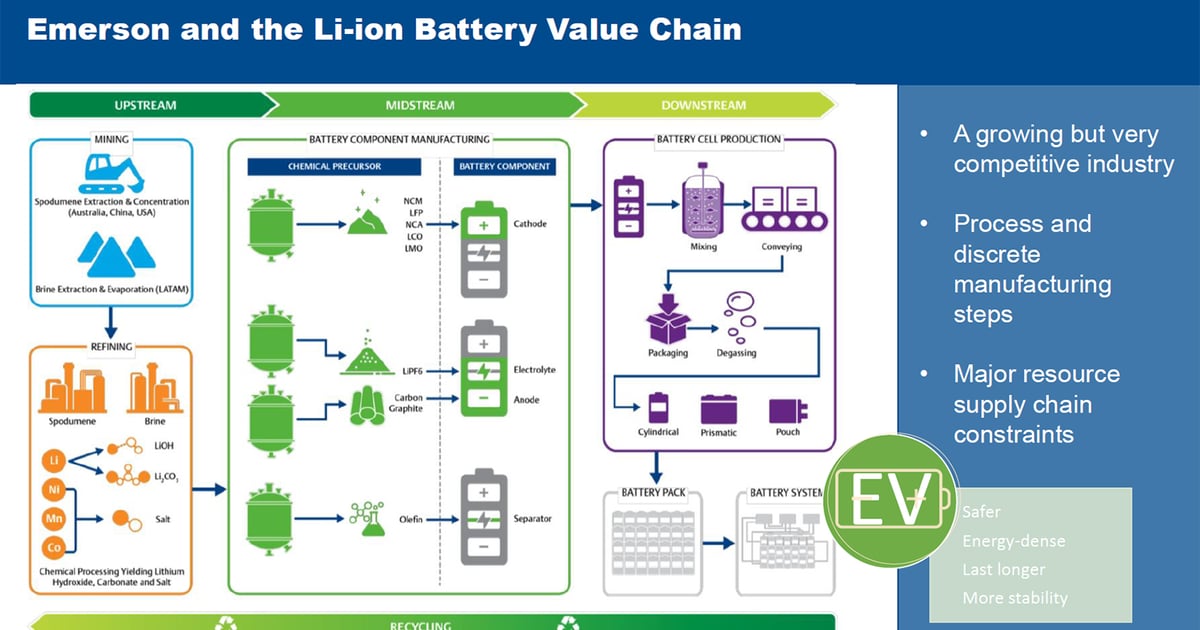
EV pack lithium content depends on pack size and cathode chemistry. A small lithium iron phosphate pack and a large high-nickel pack do not require the same material mix. For engineering and procurement planning, the important point is that an EV pack contains orders of magnitude more active battery material than a phone, and fleet-scale electrification multiplies that requirement across millions of vehicles.
Source: Battery University

Where Lithium Comes From and How It Is Extracted
Commercial lithium supply is concentrated geographically. Current research cited in the supplied material notes that Australia, Chile, and China account for about 90% of mine production, while Argentina is also a major resource holder and producer. Bolivia has very large lithium-bearing brine resources, but resource size does not automatically translate into high-volume battery-grade supply. North American sources, including projects in the United States and Canada, are strategically important but require development, permitting, processing capability, and commercial qualification.
Two extraction pathways dominate today:
- Hard-rock mining, especially spodumene mining. Ore is mined, concentrated, and then chemically converted into lithium compounds. Australia is the leading example of large-scale hard-rock supply.
- Brine extraction, common in South American salt flats. Lithium-bearing brine is pumped from underground reservoirs and processed through evaporation, concentration, and chemical treatment.
The reference article emphasized that brine production can be slow and water-intensive. It stated that producing one ton of lithium in Latin America uses about 750 tons of brine and can involve 24 months of preparation. In arid regions, water use and brine management can be a major source of environmental and community concern.
Key impact categories include:
- Water use and hydrology in dry basins.
- Changes in salinity and brine chemistry that can affect local ecosystems.
- Land disturbance from mines, ponds, roads, pipelines, and processing plants.
- Chemical processing impacts, including reagents, tailings, emissions, and waste management.
- Community and Indigenous rights concerns, especially where projects affect traditional land or water use.
Hard-rock mining and brine extraction have different environmental profiles. Hard-rock operations disturb land and require energy-intensive crushing, concentration, and chemical conversion. Brine operations may have lower visible excavation but can require large evaporation ponds and careful water-basin management.
Lithium can also be found in seawater, and seawater extraction is technically possible. The reference article noted it as a more expensive route. Based on the supplied evidence, it should be treated as a research and development pathway rather than a major commercial battery-material source.
Source: Battery University
What Lithium Is and How Batteries Use It
Lithium is a soft, silver-white alkali metal with the chemical symbol Li. It is the lightest metal. Its name comes from the Greek word lithos, meaning stone.
Its low atomic mass and electrochemical behavior make lithium valuable in batteries. In rechargeable lithium-ion cells, however, the term “lithium battery” can be misleading. Most commercial lithium-ion cells do not contain bulk metallic lithium during normal operation. Instead, lithium is stored in compounds in the positive and negative electrodes and moves as ions through the electrolyte during charge and discharge.
A simplified lithium-ion cell uses:
- A positive electrode that contains lithium in a cathode compound, such as layered oxides or lithium iron phosphate.
- A negative electrode, commonly graphite, that stores lithium ions during charging.
- An electrolyte that allows lithium-ion transport.
- A separator that prevents direct electrical contact between electrodes.
This is different from primary lithium-metal cells, where metallic lithium is used as the anode and the cell is not designed for repeated recharge. It is also different from emerging rechargeable lithium-metal designs, which aim to use metallic lithium to increase energy density but face demanding safety, cycle-life, and manufacturability challenges.
Lithium metal is reactive, especially with water and moist air. That reactivity is one reason lithium-metal handling requires strict controls. Lithium-ion battery safety concerns, however, are usually associated with cell design, electrolyte flammability, abuse conditions, internal short circuits, overcharge, overheating, and thermal runaway—not simply with exposed blocks of lithium metal inside normal commercial cells.
Technical note: Treating all lithium batteries as if they contain free metallic lithium leads to incorrect safety assumptions. Lithium-ion packs require electrical, thermal, and mechanical protection, but their hazards differ from handling bare lithium metal.
Lithium Cost, Recycling, and Battery-Grade Recovery
Lithium is essential to lithium-ion batteries, but it is not always the largest cell-cost driver. Total battery cost depends on cathode chemistry, nickel and cobalt content where used, graphite, electrolyte, separator, cell manufacturing yield, energy cost, pack structure, electronics, thermal management, and quality control.
Lithium prices can also be volatile. Long-term resources may be large, while short-term battery-grade chemical supply can still be tight. Prices respond to demand growth, project delays, refining bottlenecks, inventories, policy incentives, and changes in EV sales expectations. This volatility matters because even if lithium is only one part of cell cost, sharp price swings affect procurement, cathode-material pricing, and project economics.
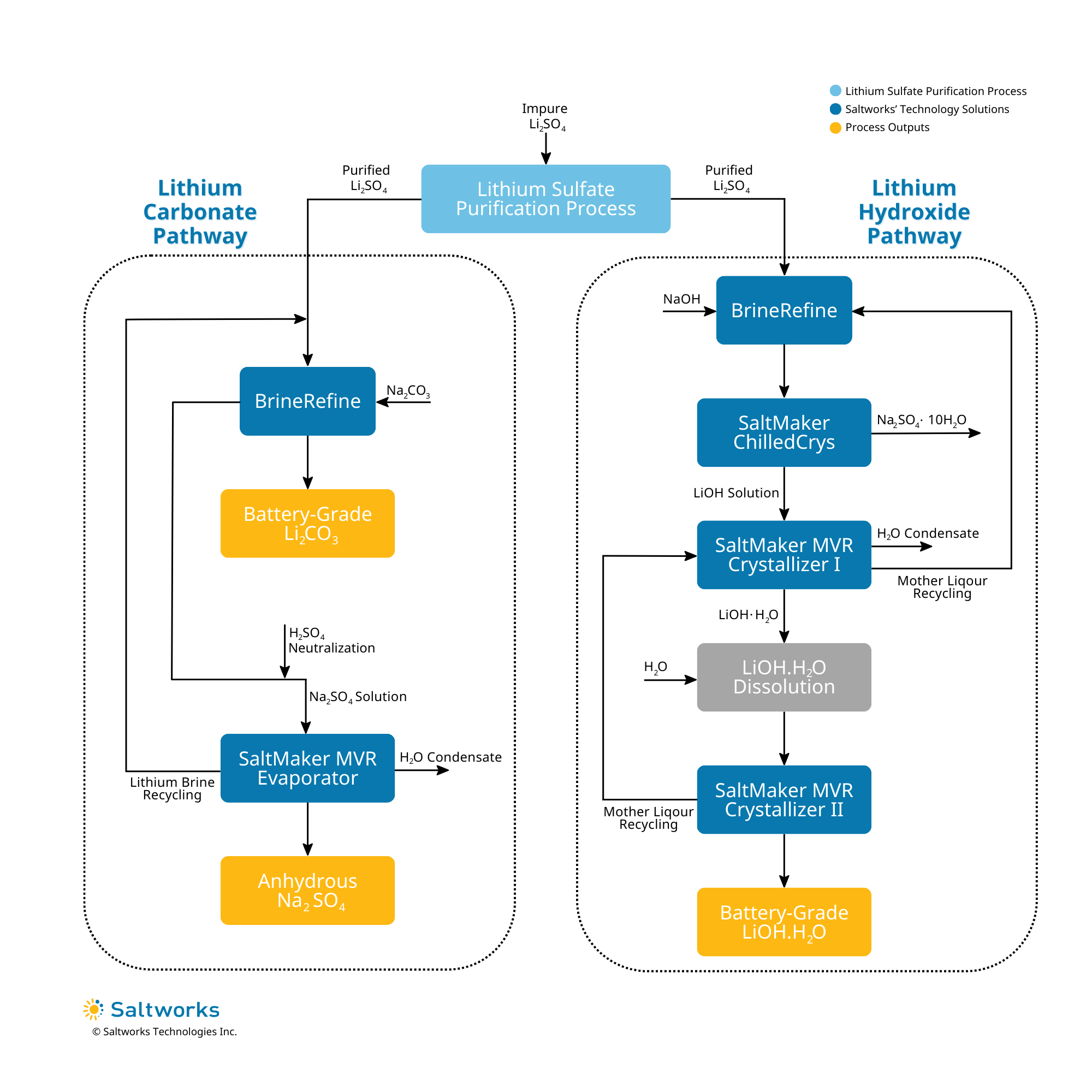
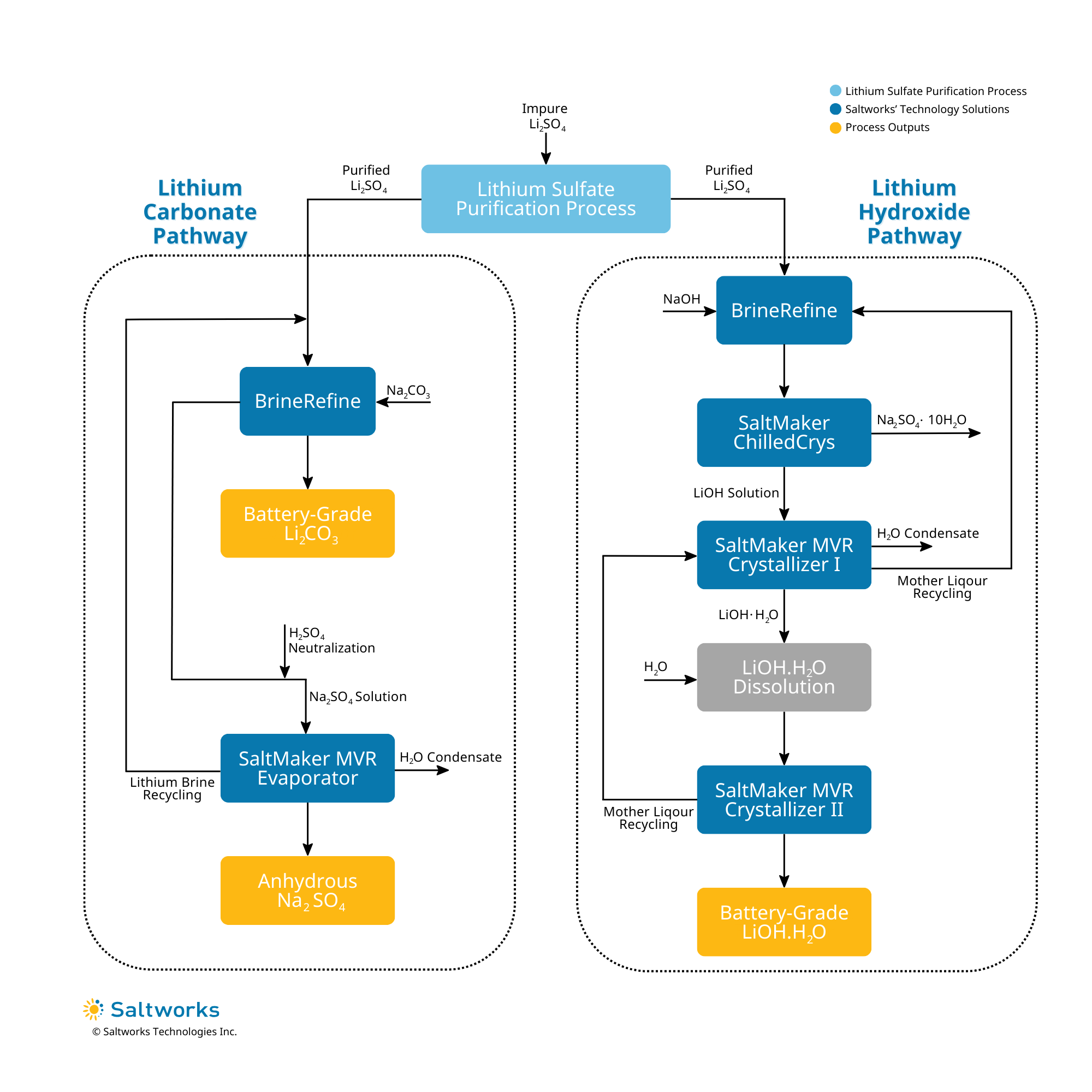
The reference article stated that lithium can theoretically be recycled repeatedly, but also reflected an older view that recycling could not produce lithium pure enough for battery reuse. That older limitation should now be qualified. Modern recycling and refining systems can recover lithium along with nickel, cobalt, copper, and other materials. One supplied recycler source states recovery of more than 95% of critical minerals from batteries, including nickel, cobalt, lithium, and copper, with reuse in battery-material production.
Recycling does not remove the need for new mining in the near term. Large EV battery cohorts must first reach end of life before recycling volumes become a major supply source. Manufacturing scrap can provide earlier feedstock, but rapid market growth means new cells require more material than retired cells can immediately return.
Recycling and mining have different roles:
| Factor | New mining and refining | Battery recycling |
|---|---|---|
| Timing | Needed immediately for growing cell production | Grows as scrap and end-of-life batteries become available |
| Supply resilience | Expands total material base | Reduces dependence on virgin supply and imports |
| Environmental profile | Land, water, energy, and chemical impacts vary by route | Can reduce primary extraction but still requires industrial processing |
| Economics | Sensitive to ore quality, brine chemistry, energy, permitting, and price | Sensitive to collection, logistics, chemistry, process yield, and metal prices |
| Battery-grade output | Requires refining and qualification | Requires recovery plus purification to battery-material specifications |
A practical battery-material strategy therefore uses both: responsible primary supply to meet growth and recycling to recover valuable material, reduce waste, and improve long-term resilience.
Beyond Lithium: Other Critical-Mineral and Rare-Earth Risks
Lithium availability is only one part of the battery and EV supply-chain problem. Different materials create different engineering and geopolitical risks.
For lithium-ion cells, the major material categories include:
- Cobalt, often associated with concentrated mining supply and social-risk concerns.
- Nickel, important for high-energy cathodes but dependent on suitable mining and refining routes.
- Graphite, required for most anodes and heavily dependent on processing capacity.
- Manganese, used in several cathode chemistries and often considered a lower-cost component, though battery-grade supply still matters.
- Copper and aluminum, used in conductors, current collectors, busbars, enclosures, and pack hardware.
- Lithium, required across lithium-ion chemistries even when cobalt and nickel are reduced or eliminated.
Rare earth elements need a separate explanation. They are generally not active materials in lithium-ion battery cells. Their importance in EVs comes mainly from permanent-magnet motors, where rare-earth magnets can provide high power density and efficiency. Some vehicles use motor designs that reduce or avoid rare earths, but many high-performance traction motors still rely on them.
China is strategically important across several parts of the energy-storage supply chain. The supplied material highlights concentration in lithium production and broader concerns about battery-material refining. The reference article also flagged China’s role in rare earth materials. The practical risk is not only where minerals are mined, but where they are processed into battery-grade chemicals, cathode and anode materials, magnet materials, and finished components.
Several approaches can reduce strategic-material risk:
- Cathode chemistry selection, such as using lithium iron phosphate where its energy-density trade-offs are acceptable.
- Motor design choices, including induction, wound-rotor, or reduced-rare-earth permanent-magnet approaches.
- Recycling, which returns lithium, nickel, cobalt, copper, and other materials to the supply chain.
- Substitution and thrift engineering, reducing high-risk material content per kWh or per vehicle.
- Domestic and allied processing capacity, not just domestic mining.
- Supplier diversification, including multiple regions, chemistries, and refining routes.
The central lesson is that lithium is available in large resource quantities, but battery availability depends on industrial execution. Mines, brine operations, chemical converters, recyclers, cell factories, and component suppliers must all scale together. The challenge is less a single-material depletion story than a coordinated engineering, environmental, and supply-chain scaling problem.
References
- Battery University | BU-308: Availability of Lithium. (n.d.). http://www.batteryuniversity.com/article/bu-308-availability-of-lithium
- Battery University | BU-308: Availability of Lithium. (n.d.). https://www.batteryuniversity.com/article/bu-308-availability-of-lithium
- Future material demand for automotive lithium-based batteries. (n.d.). https://www.nature.com/articles/s43246-020-00095-x
- Lithium phosphate battery installation in Independent .... (n.d.). https://www.facebook.com/groups/283857932238184/posts/1549438992346732
- Oops... The last source of lithium has run out :(. (n.d.). https://www.facebook.com/groups/factoriogroup/posts/2479061542425356
- Pentagon Launches US$300 Million Lithium Stockpile | INN. (n.d.). https://investingnews.com/pentagon-launches-lithium-stockpile
- [PDF] Lithium Supply in the Energy Transition. (n.d.). https://www.energypolicy.columbia.edu/wp-content/uploads/2023/12/Lithium-CGEP_FactSheet_121223-2.pdf
- Friendshoring the Lithium-Ion Battery Supply Chain. (n.d.). https://www.youtube.com/watch?v=4CottsYZFWU
- Data-driven available capacity estimation of lithium-ion ... - PMC. (n.d.). https://pmc.ncbi.nlm.nih.gov/articles/PMC11850593
- The battery supply chain and critical minerals dependence. (n.d.). https://www.redwoodmaterials.com/resources/critical-minerals-and-battery-materials-supply-chain