Battery performance declines during service life, often long before a pack stops working completely. In a personal device, reduced runtime may be an inconvenience. In clinical, industrial, transportation, or emergency equipment, the same loss of available power can affect operation, readiness, or safety.
That difference makes battery condition an operational issue rather than simply a matter of user convenience. A system can appear functional while containing a battery with reduced capacity, increased internal resistance, or insufficient reserve for the required duty. Effective maintenance therefore needs to address not only whether a battery works today, but also whether it can meet its required load when the system depends on it.
Why Battery Condition Is a Safety and Reliability Issue
Battery aging is gradual and application-dependent. Calendar time, charge and discharge behavior, temperature, storage conditions, and usage intensity can all influence the loss of usable performance. The supplied source describes the battery as beginning to fade as soon as it leaves production. That wording is useful as a reminder that degradation is not limited to the moment of complete failure, although the rate and practical significance of aging depend on the battery design and operating conditions.
A weak battery may still start equipment, accept a charge, or pass a simple voltage check. Those observations do not necessarily establish that it has enough capacity or power capability for the intended task. The risk becomes more apparent when a battery is used for backup power, emergency response, medical equipment, communications, railway equipment, or other systems in which the battery may remain idle until a demanding event occurs.
The consequences of degradation vary widely:
- Consumer electronics: shorter runtime, unexpected shutdowns, or the inconvenience of recharging more often.
- Industrial and communications equipment: reduced operating time, loss of mobility, or interruption of field work.
- Clinical equipment: reduced availability or failure to maintain operation during transport, treatment, or a power interruption.
- Transportation and safety systems: loss of backup capability or failure to complete a required operating duty.
- Mission-critical equipment: interruption of a function for which an alternative power source may not be immediately available.
The practical question is not whether every battery is equally likely to fail. It is whether the maintenance program can identify declining performance before the battery is needed. A battery that is hidden inside an otherwise healthy system can become a single point of weakness. Condition monitoring helps turn that hidden risk into information that operators and maintenance teams can act on.
Source: Battery University
Why Critical Batteries Are Often Missed by Maintenance Programs
Critical equipment is usually governed by several layers of responsibility. Regulators may define safety expectations, manufacturers may specify service procedures, owners may control replacement budgets, and operators may be responsible for daily readiness. When battery responsibilities are distributed in this way, inspection, testing, traceability, and replacement decisions can become less visible than the battery’s importance warrants.
This creates a gap between formal oversight and practical battery care. A system may have extensive documentation and scheduled inspections while battery-specific instructions remain brief, inconsistent, or buried in a broader service manual. The supplied source reports a biomedical technician’s observation that batteries were among the most neglected components and that maintenance references were often vague or hidden in service documentation. This is an attributed field observation, not a universal measurement of medical-device practice, but it identifies a recurring maintenance problem: a battery can be treated as an accessory even when the equipment depends on it.
Other engineering disciplines provide a useful comparison. Aircraft and machinery maintenance commonly relates service activity to measurable operating conditions such as hours, cycles, or other accumulated-use indicators. The source gives an Airbus A330 maintenance interval of approximately 200 to 400 cycles as an example, but intervals vary by component, operator program, and approved maintenance requirements; the figure should not be generalized to all aircraft systems. The broader lesson is that important hardware is managed through defined inspection and service logic rather than by waiting for failure.
Battery programs often lack an equally clear operating metric. Calendar age may be recorded, but calendar age alone does not show how deeply a pack was discharged, how long it spent at elevated temperature, or how much capacity remains. Conversely, a battery can be replaced on a fixed schedule without measuring whether its condition has changed enough to justify removal.
The source also describes a US railway manager who preferred discarding batteries with radios rather than testing them. This anecdote concerned a fleet of approximately 10,000 high-end radios and illustrates an economic and cultural choice: when testing appears inconvenient, replacement may seem simpler. However, replacing without testing can discard batteries with useful remaining life, while also failing to identify why some packs deteriorate earlier than others.
A maintenance program should therefore define, for each battery-supported system:
- What must be measured: for example, capacity, load performance, charging behavior, or other manufacturer-defined indicators.
- When it must be measured: during commissioning, at scheduled intervals, after abnormal events, or before critical deployment.
- What result requires action: continued use, closer monitoring, repair, quarantine, or replacement.
- How the result is recorded: including pack identity, test date, equipment assignment, and relevant operating history.
This approach is more useful than treating the battery as a scapegoat after a system failure. Tightening unrelated compliance requirements does not compensate for a missing battery inspection or an undefined replacement decision. Battery safety should be managed as part of the system’s reliability process, with responsibilities assigned clearly among the manufacturer, owner, service organization, and user.
Managing Battery Aging After Equipment Approval
Equipment qualification or approval is commonly demonstrated using a new or near-new battery because that establishes the system’s intended performance under controlled conditions. It does not, by itself, describe how the system will behave after the battery has aged through real-world use. This distinction is particularly important for medical equipment, but it also applies to industrial tools, portable communications equipment, transportation systems, and emergency power units.
Once degradation begins, operators need lifecycle policies rather than a one-time approval decision. At minimum, a fleet manager must determine:
- the performance threshold at which a battery is removed;
- how many charged spare packs are required for the expected workload;
- how frequently batteries are tested;
- how batteries are identified and traced between equipment and storage;
- how abnormal temperature, charging, or discharge events affect service decisions.
There is no single replacement threshold that can be applied to every chemistry, pack design, or duty cycle. The threshold must relate to the equipment’s required runtime, peak power, backup duration, and consequences of interruption. A battery that remains suitable for a low-power application may be unacceptable in equipment that must support a high load or operate for a specified emergency interval.
Fixed service-life rules can be useful when testing is impractical, but they are only a proxy for condition. A nominal replacement age does not prove that every battery has the same remaining capacity. Some packs may be removed while they still have substantial useful performance; others may deteriorate faster because of heat, intensive cycling, poor storage, or charging problems. Measuring actual condition can support more defensible decisions, provided the test method reflects the equipment’s real requirements.
Premature replacement has both economic and environmental costs. It increases purchasing, handling, storage, and disposal activity and may remove batteries that could have continued in less demanding service. Extending service indefinitely creates the opposite risk: a battery may remain installed after its reserve has fallen below an acceptable level. The objective is not maximum calendar life or minimum replacement frequency. It is controlled use within a known performance envelope.
Claims about the scale of medical battery problems should also be interpreted carefully. A survey finding, a regulatory observation, and an individual technician’s experience are different types of evidence and should not be presented as interchangeable. The supplied material does not provide enough verified detail about the often-repeated AAMI or FDA percentages to reproduce those figures responsibly. The absence of a precise statistic does not remove the maintenance issue; it means that organizations should rely on documented equipment requirements, test results, failure records, and fleet data rather than unsupported generalizations.
A practical lifecycle policy can combine both age and condition. For example, age can trigger a scheduled review, while a capacity or load test determines whether the battery remains acceptable. The policy should also specify what happens when a battery fails: quarantine, root-cause investigation, controlled recycling, and replacement with a verified compatible pack. This makes battery management part of equipment governance instead of an emergency purchase made after a failure.
Battery Diagnostics and the Shift to Continuous Monitoring
Battery diagnostics and monitoring have historically received less attention than many other areas of technology. Equipment may contain sophisticated electronics for control and communication while providing little information about the condition of its energy source. As a result, users often infer battery health from runtime, charging time, warning messages, or an unexpected shutdown—signals that may arrive too late for reliable planning.
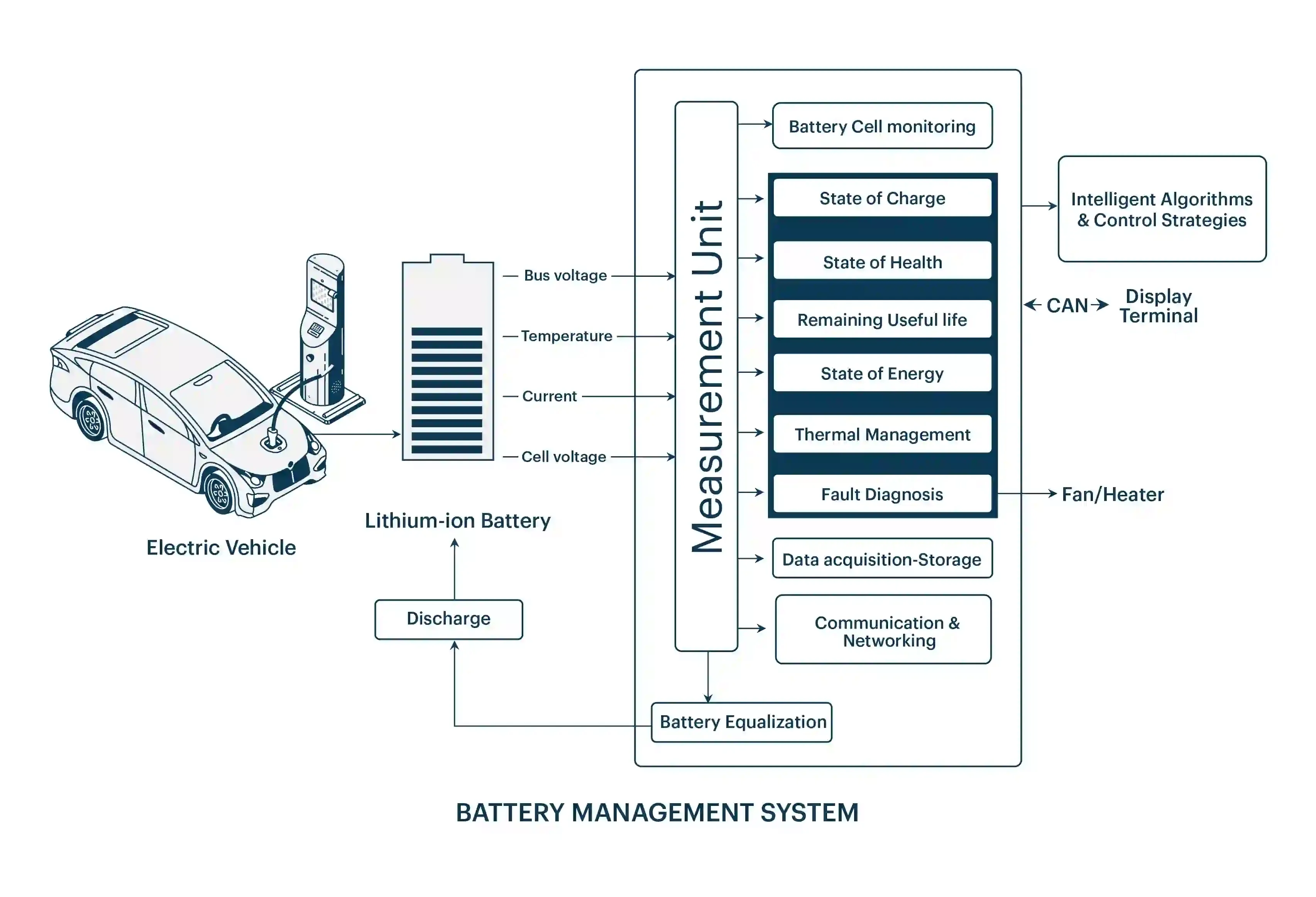
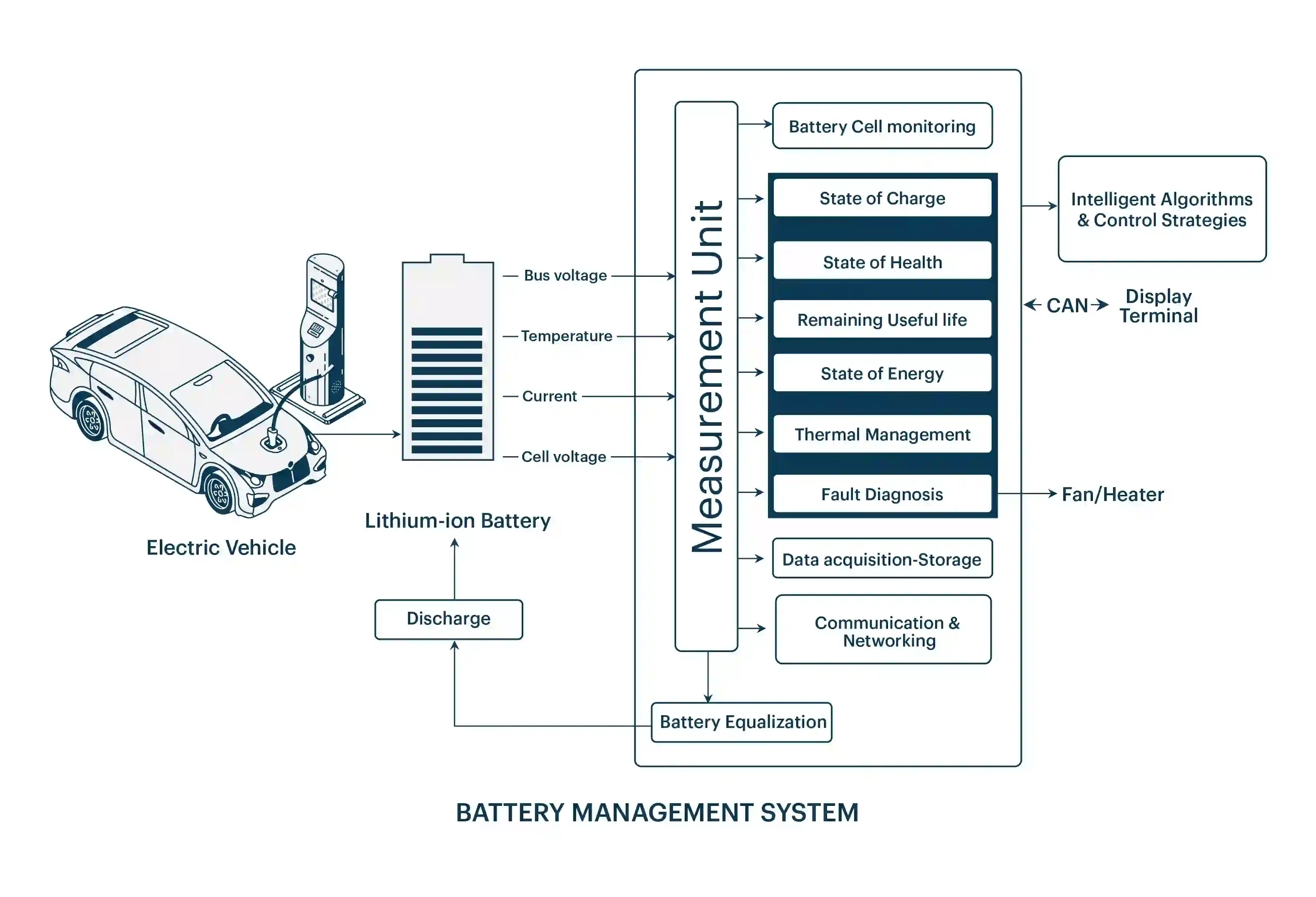
Modern systems can assess battery performance during charging and make selected results visible to the battery user or fleet manager. Depending on the design, this may include measurements or estimates related to charge acceptance, available capacity, internal resistance, temperature, cycle history, and fault conditions. The exact information and accuracy depend on the battery chemistry, sensors, algorithms, and validation of the monitoring system. Monitoring should therefore be treated as a tool that supports maintenance, not as proof that every battery parameter is known perfectly.
Diagnostics can be implemented at several levels:
- Portable analyzers can test individual packs during service or before deployment.
- Onboard battery management systems can collect operating data and identify abnormal conditions while the equipment is in use.
- Charging equipment can evaluate behavior during a controlled charging process and flag packs that do not respond normally.
- Fleet-level software can combine battery identity, test history, usage, and failure records to support condition-based maintenance.
These tools are most valuable when their results lead to defined actions. A warning with no replacement rule, responsible owner, or follow-up process does not solve the maintenance problem. Organizations should connect diagnostic results to service records, spare-parts planning, deployment decisions, and post-failure analysis.
Continuous monitoring is not universally available, and it cannot replace safe handling, correct charging, visual inspection, or manufacturer instructions. Nevertheless, greater visibility can reduce hidden failures and improve the return on maintenance spending. Instead of discarding every battery at an arbitrary age—or retaining every battery until it fails—operators can make decisions using evidence appropriate to the system’s risk.
The wider direction is clear: battery management is moving from passive replacement toward measurable condition assessment. For critical equipment, the most useful battery program is one that makes degradation visible early, links test results to operational requirements, and treats the battery as an engineered component of the complete system.
References
- Battery University | BU-1009: Battery Paradox - Afterword. (n.d.). http://www.batteryuniversity.com/article/bu-1009-battery-paradox-afterword
- Battery University - WeCanFigureThisOut.org. (n.d.). https://wecanfigurethisout.org/ENERGY/Web_notes/Electrochemical/Batteries_and_Fuel_Cells_Supporting_Files/How%20do%20Lithium%20Batteries%20Work%20%E2%80%93%20Battery%20University.pdf
- Learn About Batteries | Battery University. (n.d.). http://www.batteryuniversity.com/articles
- Afterworld is a brand new grand strategy game from Paradox. With .... (n.d.). https://www.facebook.com/PCGamesNetwork/posts/afterworld-is-a-brand-new-grand-strategy-game-from-paradox-with-lashings-of-fall/1655692089243631
- Paradox 1738 Alarm Panel Battery Replacement. (n.d.). https://www.youtube.com/watch?v=Oj398eDOTE8
- Battery Lithium - Paradox - Headquarters. (n.d.). https://www.paradox.com/Products/default.asp?CATID=336
- Paradox | Bookreporter.com. (n.d.). https://www.bookreporter.com/reviews/paradox-by-douglas-preston-and-aletheia-preston
- Raise an Empire atop the Ashes in Afterworld, a Post-apocalyptic Grand Strategy Game - Paradox Interactive. (n.d.). https://www.paradoxinteractive.com/media/press-releases/paradox-interactive/raise-an-empire-atop-the-ashes-in-afterworld-a-post-apocalyptic-grand-strategy-game
- Is Afterworld Paradox’s Best Roleplay Game Since Crusader Kings 3?. (n.d.). https://www.youtube.com/watch?v=kixImbfJTgw
- Paradox alarm backup battery issue? - Geekzone. (n.d.). https://www.geekzone.co.nz/forums.asp?forumid=73&topicid=318068