A dependable battery fleet needs more than a charger and a supply of spare packs. It needs a repeatable process for deciding when a battery still meets its operational requirement, when it needs further testing, and when it should be serviced or replaced. This is a reliability and logistics problem as much as an electrical one.
An everyday replenishment system provides a useful analogy: supplies are checked during normal use, and replenishment is triggered before the supply is exhausted. A battery endurance plan applies the same principle to industrial smart batteries. Routine charging becomes an opportunity to check available capacity, update fleet records, and begin corrective action before a battery fails during an operation.
Why Battery Fleets Need an Endurance Plan
Battery failure is often discovered at the worst possible time: when a device is needed and the battery can no longer provide its expected runtime. Waiting for that point makes replacement reactive and can create equipment downtime, emergency purchasing, and uncertainty about whether other batteries in the fleet are also aging.
An endurance plan establishes a measurable reserve requirement and checks batteries against it during ordinary charging. The objective is not simply to report a state-of-charge value. A battery may show a high charge percentage immediately after charging while its usable capacity has already declined. The important question is whether it can still support the intended load and mission duration with an appropriate margin.
The plan should therefore connect four activities:
- defining the minimum capacity required for the application;
- checking smart-battery condition and usable capacity;
- recording results across the fleet; and
- routing batteries for continued use, calibration, service, reassignment, or replacement.
This approach makes battery replacement a planned reliability activity instead of an emergency response.
MORE and the Target Selector: Setting the Required Reserve
Minimum Operational Reserve Energy (MORE) is a reserve-based way to express the minimum usable battery capacity required for an intended operation. In practical terms, it asks whether a battery retains enough usable energy to complete its assigned task with the required margin.
The threshold should not be treated as a universal percentage for every battery or application. A medical device, mobile industrial tool, communications unit, or autonomous platform may have different runtime requirements, loads, shutdown behavior, and consequences of interruption. The reserve requirement must be related to the actual operating profile.
The reference system describes adjustable MORE levels and a Target Selector used to establish the desired capacity threshold. Adjustability is important because the most conservative setting is not always the most economical one. A higher target provides more operating margin and can cause a battery to be removed from demanding service earlier. A lower target may allow more utilization of aging batteries, but leaves less margin when conditions change.
A target-setting policy should consider:
- required mission or shift duration;
- average and peak load;
- the battery’s chemistry, rated capacity, and operating limits;
- temperature and other environmental conditions;
- expected voltage sag or cutoff behavior; and
- the operational consequences of interruption.
The Universal Supervisor Charger and Cloud Analytics are source concepts associated with this workflow. The supplied material describes the charger as operating either in standalone mode or connected to a host that enables cloud-based fleet visibility. In a standalone installation, the charger can provide a local battery assessment without depending on a fleet-management connection. A connected installation can transfer results for broader reporting and supervisory review.
The exact interfaces, supported battery models, connectivity design, data-retention policy, and automation available in a particular implementation must be confirmed from the applicable equipment documentation. A reserve threshold should also be validated against measured application performance rather than adopted solely because it is available as a charger setting.
Checking Capacity and Battery State of Health During Charging
The proposed workflow uses battery insertion as a diagnostic opportunity. When a compatible smart battery is placed in the charger, the charger can validate available capacity and provide a simple state-of-health indication. The supplied source describes a green indication for an acceptable result and an amber indication calling for calibration or replacement.
That indication should be understood as a screening result, not as a complete failure analysis. The workflow evaluates Leftover Charge, or the usable energy remaining before the charging cycle begins, and compares the result with the selected target. A low result can indicate capacity fade and may justify calibration, additional testing, service, or replacement. It does not by itself identify the exact cause. Cell imbalance, measurement error, temperature, recent operating conditions, protection limits, or another battery fault may require separate investigation.
A safe-landing analogy helps explain the distinction. An aircraft’s fuel gauge may show that fuel remains, but the relevant question is whether enough usable fuel is available to reach a safe landing point. Similarly, a battery can have charge remaining while no longer retaining enough healthy usable capacity for its assigned operation.
Pre-charge measurements also have limitations. Capacity depends on load profile, cutoff voltage, temperature, battery age, and test conditions. A single observation may be insufficient to distinguish normal variation from degradation. Calibration or a repeat test can help resolve uncertainty, but the required procedure and interval depend on the battery system and the charger implementation.
For operational use, a sensible interpretation is:
- Pass or acceptable indication: the measured result meets the selected operational target under the applicable test conditions.
- Alert indication: the result does not provide sufficient confidence that the battery meets the target and should be routed for calibration, further testing, service, reassignment, or replacement.
The indication should support a decision process rather than replace one. Safety-critical or high-consequence applications require application-specific validation and appropriate battery-manufacturer procedures.
Choosing Reserve Targets and Replacing Batteries Before Failure
A managed fleet needs a defined end-of-use reserve. Without one, replacement tends to occur only after a battery causes a runtime problem or fails to start equipment. A reserve target creates an earlier and more consistent trigger.
The source article gives retaining approximately 10–20 percent charge at the end of a day as an example policy. This is an application example, not a universal battery rule. The correct value depends on how the battery is used and what happens if its available energy is lower than expected.
A higher reserve target generally increases operational margin. It can reduce the risk that an unexpected load, cold condition, aging effect, or longer-than-planned mission will exhaust the battery. The tradeoff is that batteries may be removed from a demanding role while they still have usable capacity for less demanding work.
A lower target can extend service utilization and reduce premature replacement, but it provides less tolerance for variation. It may be appropriate only when the load, runtime, environment, and consequences of interruption are well understood.
Reserve policy should be reviewed when any of these change:
- workload or duty cycle;
- mission length or shift pattern;
- battery chemistry or pack design;
- ambient temperature range;
- equipment cutoff voltage;
- peak-power demand; or
- the consequence of an interrupted operation.
A battery that no longer meets the target for a demanding role may not be unusable. It could be reassigned to a lower-demand application if its condition is acceptable there. If it cannot meet any approved role, it should be removed from service through the organization’s battery-handling and recycling process. The purpose of the reserve target is to trigger this decision before an operational failure occurs.
Connecting Charger Checks to a Fleet Endurance Workflow
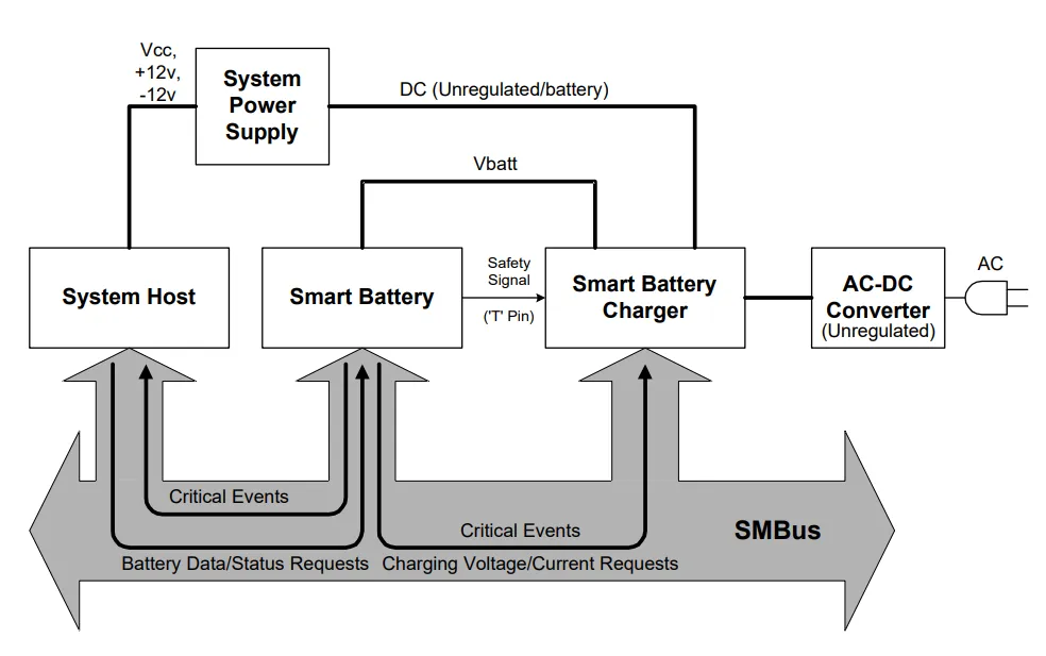
Connecting a charger to a host or management system turns isolated battery checks into fleet-level visibility. Instead of relying on users to recognize declining runtime, supervisors can review charging results and identify batteries that repeatedly fall below the selected target.
A conceptual workflow is:
- A user inserts a compatible smart battery during routine charging.
- The charger reads available battery information and evaluates the pre-charge condition.
- The charger provides a local status indication and charges the battery according to its supported procedure.
- A connected host or analytics service records the result against the battery identity.
- Supervisors review batteries that show low leftover charge, repeated alerts, or declining performance.
- An approved action is assigned: continued service, calibration, additional testing, reassignment, service, quarantine, or replacement.
- Inventory and supply-chain personnel use the decision to maintain an adequate replacement pool.
Source: Battery University

The supplied Cloud Analytics concept presents fleet information such as Leftover Charge, Energy Consumed, and Remaining Useful Life (RUL) in years. These metrics can help a supervisor see readiness and degradation across many batteries rather than inspecting packs one at a time. Their accuracy and meaning depend on the measurement method, battery data, operating history, and implementation. RUL should therefore be treated as an estimate for planning, not a guaranteed expiration date.
Automation can reduce manual effort during routine charging, but it should not remove human control from unusual cases. A connectivity failure, incomplete battery record, unexpected temperature, abnormal load, or conflicting diagnostic result may require review before a replacement is authorized. The host, cloud service, inventory system, and charger also need compatible interfaces, appropriate access control, and a defined policy for data retention and cybersecurity.
The central idea is to close the loop between energy use and battery supply. Charging produces a condition check; the condition check informs maintenance; maintenance and replacement decisions update inventory; and inventory planning helps keep serviceable batteries available.
Battery Triage: Calibration, Recovery, Reassignment, and Replacement
A battery below the selected target should enter a triage process rather than automatically being discarded. The first step is to determine whether the result is repeatable and whether the test conditions were suitable.
A practical decision sequence is:
- Review the result and operating context. Check the battery identity, recent use, temperature, load, and any available battery-management information.
- Calibrate or retest when appropriate. A calibration procedure can help resolve uncertainty in the reported capacity or state-of-health value. The procedure must follow the applicable equipment and battery guidance.
- Assess the result against the intended role. A battery that fails a demanding reserve target may still be suitable for a lower-demand assignment, provided its condition is acceptable and the reassignment is approved.
- Service or quarantine abnormal batteries. Packs showing behavior that could indicate a safety or hardware problem should not be returned to service solely because a capacity reading appears acceptable.
- Replace when the required reserve cannot be demonstrated. Replacement is justified when testing confirms that the battery no longer meets the approved target for its role.
This distinction matters because a low leftover-charge result is evidence of an operational shortfall, not proof of one particular failure mechanism. Analytics can identify patterns and prioritize attention, while diagnostic testing and qualified personnel determine the appropriate disposition.
Conclusion: A Proactive, Analytics-Supported Endurance Workflow
A battery endurance plan begins by defining the minimum usable capacity or reserve required for safe and reliable operation. Adjustable targets, such as those represented by MORE and a Target Selector, can help align testing and replacement decisions with the requirements of a particular fleet.
Routine charging can then become a low-effort inspection point. Smart-battery checks identify packs that meet the target and flag those requiring calibration, service, reassignment, or replacement. When chargers are connected to host or cloud analytics, supervisors can gain a fleet-level view of readiness, leftover charge, energy use, and estimated remaining useful life where those measurements are supported.
The result is a proactive workflow that helps maintain battery availability without requiring users to perform a separate inspection for every charging event. However, the threshold, diagnostic interpretation, and replacement policy must be validated for the application, battery chemistry, operating environment, and consequences of interruption. No reserve setting or analytics estimate should be treated as universally suitable without that validation.
References
- Battery University | BU-918: Battery Endurance Plan. (n.d.). http://www.batteryuniversity.com/article/bu-918-battery-endurance-plan
- BU-811: Assuring Minimum Operational Reserve…. (n.d.). https://www.batteryuniversity.com/article/bu-811-assuring-minimum-operational-reserve-energy-more
- Battery Endurance Plan facts that boost battery life. (n.d.). https://www.large-battery.com/blog/battery-endurance-plan-facts-boost-battery-life-longevity
- time (only) referenced battery rundown test. (n.d.). https://www.vertiv.com/4afcc5/globalassets/documents/battcon-static-assets/2018/time-only-referenced-battery-rundown-test.pdf
- Beyond AI: Why Battery Analytics Require Electrochemistry .... (n.d.). https://powerup-technology.com/beyond-ai-why-battery-analytics-require-electrochemistry-data-science
- Unlock Hidden Insights for Boosting Battery Efficiency Today!. (n.d.). https://www.youtube.com/watch?v=7uQ-kK5QPq8
- Battery Life Calculator|Tools - Utmel. (n.d.). https://www.utmel.com/tools/battery-life-calculator?id=1
- Analysis & Targeting Tools. (n.d.). https://athenixsolutions.com/capabilities/intelligence-cyber-operations/analysis-targeting-tools
- Using Data Analytics for Standby Battery Replacement and .... (n.d.). https://www.multitel.com/altas-software-helps-you-make-data-analytics-of-batteries-condition-so-you-can-make-better-decision-making-and-budget-planning
- Operational Analytics & Search Database | CrateDB. (n.d.). https://cratedb.com/use-cases/operational-analytics-search