Most batteries are safe during normal use when they remain sealed, undamaged, correctly charged and properly stored. Health concerns rise when batteries are opened, crushed, overheated, overcharged, recycled without controls, or handled in ways that expose people to toxic metals, corrosive electrolyte or hazardous gases.
The risks are not the same for every chemistry. Lead-acid batteries bring concerns about lead and sulfuric acid. Nickel-cadmium batteries contain cadmium, a toxic metal that requires controlled recycling. Small button and coin cells present a separate ingestion hazard for children and pets. Charging areas, especially for flooded lead-acid batteries, need attention to ventilation and ignition control.
This article focuses on practical health and safety issues rather than electrical performance. It is intended for battery users, workshops, schools, maintenance personnel and anyone working near battery storage, charging or recycling operations.
Lead Exposure Risks in Lead-Acid Batteries
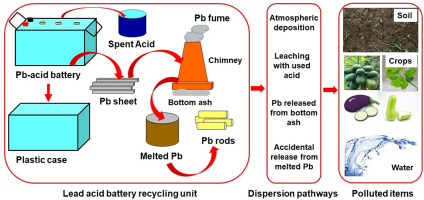
Lead-acid batteries contain large amounts of lead in the plates and lead compounds in the active material. In a sealed, intact battery, the lead is not normally accessible to the user. The hazard increases when batteries are manufactured, repaired, broken open, crushed, melted, recycled informally, or handled in dusty areas where lead residues can accumulate.
Lead can enter the body mainly by two routes:
- Inhalation: breathing airborne lead dust or fumes. In battery manufacturing and recycling, inhalation of inorganic lead dust is often a major occupational exposure pathway.
- Ingestion: swallowing lead-contaminated dust, soil or residue from hands, food, cigarettes, tools, clothing, floors or work surfaces.
Skin contact with lead dust is also a contamination concern because material on the hands can later be transferred to the mouth, food, vehicles or homes. Lead particles can be carried from workplaces on shoes, clothing, gloves, hair, equipment and scrap materials, creating take-home exposure for families.
Source: Battery University

Lead is a systemic toxicant. Once absorbed, it can circulate in blood and accumulate in tissues such as bone and organs. Health effects may involve several body systems, including:
- the nervous system and brain
- kidneys
- blood-forming system
- cardiovascular system
- reproductive system
- fetal and child development
High exposures can produce severe poisoning. Lower chronic exposures can still be important because lead has no known beneficial role in the body, and public-health agencies do not consider any level of lead exposure completely safe. For children, the CDC currently uses 3.5 µg/dL as the blood lead reference value to identify children with blood lead levels higher than most children and who may need follow-up.
Children and fetuses are especially vulnerable. Developing nervous systems are highly sensitive to lead, and young children are more likely to ingest contaminated dust or soil through hand-to-mouth behavior. Lead exposure in early life is associated with developmental and neurological harm. Pregnant workers or household members exposed to lead dust require particular protection because lead can affect fetal development.
Battery workers can experience elevated blood lead levels when controls are inadequate. Reported examples from lead-acid battery and recycling environments show why controls are necessary. Studies cited in the supplied research describe high blood lead levels among workers in battery manufacturing and recycling tasks, including reports from Bangladesh where workers in acidifying, plate-making and battery opening or breaking operations had average blood lead levels in the range of roughly 66–79 µg/dL. A study of battery recycling workers in Portugal reported that about 69% of exposed workers exceeded a blood lead level of 15 µg/dL. These values should not be treated as universal for all facilities, but they illustrate the exposure potential when dust control, hygiene and respiratory protection are insufficient.
Environmental contamination is another concern. Lead occurs naturally in soil at about 15–40 mg/kg, but soil concentrations can rise many times higher near poorly controlled lead battery manufacturing or recycling plants. The reference research reports soil contamination near some battery recycling settings in developing regions from 40 mg/kg up to 140,000 mg/kg. Such extreme values depend on site practices and local conditions, but they show how uncontrolled processing can contaminate communities.
Informal recycling is particularly hazardous. Breaking batteries by hand, draining electrolyte, smelting plates in open areas, or storing crushed battery waste on bare ground can spread lead into soil and dust. Nearby homes may be contaminated through windblown dust, worker clothing, tools, vehicles and reused containers. Effective controls include enclosed processes, local exhaust ventilation, wet cleaning instead of dry sweeping, protective clothing, handwashing facilities, medical surveillance and controlled recycling rather than backyard dismantling.
Sulfuric Acid Burns and First Aid
Flooded lead-acid batteries contain sulfuric acid electrolyte. Absorbed glass mat and gel lead-acid batteries immobilize much of the electrolyte, but damaged cases, vents or terminals can still release corrosive material. Sulfuric acid can burn skin, seriously damage eyes, attack clothing and corrode many surfaces.
Exposure may occur during battery filling, maintenance, charging failures, vehicle crashes, battery rupture, repair work or informal recycling. It can also occur alongside lead exposure when workers break open lead-acid batteries or handle contaminated scrap.
The practical response to acid contact is fast dilution and removal:
- Skin exposure: immediately flush the affected skin with plenty of clean running water. Remove contaminated clothing, shoes, gloves, watches or jewelry while rinsing, if this can be done safely. Continue rinsing for an extended period and seek medical attention for persistent pain, visible burns or large exposures.
- Eye exposure: rinse continuously with clean water and get urgent medical attention. Hold the eyelids open if possible and avoid rubbing the eye. Eye exposure to battery acid should be treated as a serious medical event.
- Contaminated clothing: remove and isolate it. Acid-soaked fabric can continue injuring skin and may damage other materials.
Do not try to neutralize sulfuric acid on skin or in the eyes with household chemicals such as baking soda solutions. Neutralization reactions can generate heat, delay proper flushing and worsen irritation or injury. Neutralization may be appropriate for controlled spill cleanup by trained personnel using suitable materials, but first aid for the body is water flushing and medical care.
For battery work where acid contact is possible, use chemical-resistant gloves, eye protection or a face shield, acid-resistant clothing when needed, and a clean water source nearby. Work areas should be arranged so that a person exposed to acid can reach eyewash or washing facilities without delay.
Cadmium Hazards in Nickel-Cadmium Batteries
Nickel-cadmium batteries contain cadmium, a toxic metal. Intact sealed NiCd cells do not normally expose users to cadmium during ordinary handling. The risk rises when cells are damaged, opened, burned, crushed, welded improperly, shredded without controls, or recycled in facilities that do not control dust and fumes.
Cadmium exposure is associated with serious health concerns, especially with prolonged or significant exposure. The kidneys are a major target organ, and systemic toxicity can occur when cadmium is absorbed through inhalation or ingestion. Cadmium dust or fumes are particular concerns in manufacturing, recycling and high-temperature processing.
The exposure profile differs by battery chemistry:
| Battery chemistry | Main health concern when damaged or mishandled |
|---|---|
| Lead-acid | Lead dust or residue, sulfuric acid electrolyte, charging gases |
| Nickel-cadmium | Cadmium exposure, alkaline electrolyte, recycling dust or fumes |
| Nickel-metal-hydride | No cadmium, but alkaline electrolyte and metal-containing materials still require safe handling |
| Lithium-ion | No cadmium, but damaged cells can present fire, heat, electrolyte, smoke and metal-compound exposure hazards |
This comparison should not be read as a simple ranking of overall danger. A sealed consumer NiCd cell on a shelf is a different hazard from a burning lithium-ion pack or a broken lead-acid battery in an uncontrolled recycling yard. Risk depends on chemistry, size, state of charge, damage condition, ventilation, temperature and handling method.
Occupational cadmium exposure is most relevant to workers involved in NiCd cell manufacture, pack repair, waste sorting, recycling or cleanup of damaged cells. The reference material notes reports of health problems among workers at NiCd manufacturing plants after prolonged exposure. Such reports support the need for industrial hygiene controls, but they should not be used to assume that every NiCd worker will become ill. Exposure measurement, process controls and medical surveillance determine real workplace risk.
Because of cadmium toxicity, many jurisdictions restrict disposal of NiCd batteries in ordinary landfill waste and require recycling, take-back or special collection. Users should keep NiCd batteries out of mixed household trash where local rules prohibit disposal, avoid opening cells, and send spent packs to an approved battery collection or recycling channel.
Practical Battery Safety Tips
Battery safety in homes, schools and workshops is mostly about preventing access, avoiding abuse and responding quickly when something goes wrong. Most incidents can be reduced by treating batteries as electrical, chemical and ingestion hazards rather than as ordinary disposable objects.
Practical precautions include:
- Keep all batteries away from young children and pets, especially button and coin cells.
- Store new batteries in original packaging when possible.
- Keep loose batteries in a secured container, not scattered in drawers with metal objects.
- Tape terminals when appropriate, especially on loose rechargeable packs or batteries with exposed terminals, to reduce short-circuit risk.
- Do not carry loose batteries with keys, coins, tools or jewelry.
- Do not use batteries that are leaking, swollen, crushed, corroded, unusually hot or producing odor.
- Do not handle leaking or damaged batteries with bare hands.
- Wash hands after handling batteries, battery compartments, scrap batteries or contaminated equipment.
Battery ingestion is a medical emergency. Button and coin cells are especially dangerous because they can lodge in the body and cause severe internal injury quickly. Lithium coin cells are a major concern due to their voltage and size, but any suspected battery ingestion deserves urgent attention.
If a child, adult or pet may have swallowed a battery:
- Seek emergency medical help or contact poison control immediately.
- Do not wait for symptoms to appear.
- Do not induce vomiting.
- Do not give food or drink unless directed by medical professionals or poison control.
- If possible, identify the battery type and size, but do not delay medical care to search for packaging.
In workshops and maintenance areas, use additional controls when batteries are damaged or when higher-energy packs are handled. Wear gloves and eye protection, provide ventilation, prevent short circuits, and isolate suspect batteries on a noncombustible surface away from flammable materials. For lead-acid battery service, add acid-resistant PPE and hygiene controls to prevent lead and acid transfer.
Schools and training labs should avoid letting students disassemble unknown batteries. Demonstrations should use safe, purpose-built teaching cells or de-energized components rather than damaged commercial batteries. Waste batteries should be collected in labeled containers compatible with the chemistry and local recycling requirements.
Ventilation When Charging Batteries
Charging can create gas hazards, especially with flooded lead-acid batteries. During charging, water in the electrolyte can break down into hydrogen and oxygen. Normal charging produces limited gas, but overcharging, equalization charging, high temperature, aging batteries or damaged cells can greatly increase gassing.
Hydrogen is flammable and can accumulate in poorly ventilated spaces. If an ignition source is present, accumulated hydrogen can explode. Ignition sources include sparks, open flames, cigarettes, relays, switches, static discharge, hot work, and tools or conductors that arc across battery terminals.
Safe charging practices include:
- Charge batteries in a ventilated area.
- Keep sparks, flames, smoking materials and hot work away from charging batteries.
- Use chargers compatible with the battery chemistry, voltage and capacity.
- Follow battery and charger manufacturer instructions.
- Avoid overcharging and do not bypass charger safety functions.
- Inspect batteries before charging; do not charge visibly damaged, frozen, leaking or severely corroded batteries unless the manufacturer provides a safe procedure.
- Connect and disconnect charging leads with the charger off when the equipment instructions call for it.
- Keep metal tools and loose conductive objects away from battery terminals.
Ventilation matters in garages, marine compartments, RV battery boxes, forklifts, golf carts, solar battery rooms, telecom backup systems and industrial charging rooms. Enclosed compartments should be designed so gas cannot collect near the ceiling or inside unvented boxes. Industrial battery rooms require more formal ventilation, electrical classification and emergency planning based on the battery type and charging profile.
Lead-acid batteries can also produce hydrogen sulfide under abusive conditions such as severe overcharging, overheating, internal failure or damage. Hydrogen sulfide is highly toxic. At low levels it may smell like rotten eggs, but smell is not a reliable safety indicator because odor perception varies and can fail at dangerous concentrations.
Leave the area and seek emergency help if a battery or charging area has a strong rotten-egg odor, visible damage with gas release, eye or throat irritation, dizziness, nausea, breathing difficulty or other signs of gas exposure. Do not lean over the battery to investigate. Shut down charging only if it can be done safely from a protected location; otherwise evacuate and let trained responders handle the incident.
Good ventilation is not a substitute for correct charging. A properly selected charger, sound battery condition, clean terminals, secure connections and ignition control all work together. For small consumer batteries, follow the device instructions and charge on a stable surface away from combustibles. For large lead-acid installations, treat ventilation and gas detection as part of the engineering design rather than as an afterthought.
References
- Battery University | BU-703: Health Concerns with Batteries. (n.d.). https://www.batteryuniversity.com/article/bu-703-health-concerns-with-batteries
- Battery University | BU-703: Health Concerns with Batteries. (n.d.). http://www.batteryuniversity.com/article/bu-703-health-concerns-with-batteries
- Blood Lead Levels and Health Problems of Lead Acid Battery .... (n.d.). https://pmc.ncbi.nlm.nih.gov/articles/PMC3953567
- [PDF] Lead exposure among recycler battery workers - [email protected]. (n.d.). https://run.unl.pt/bitstreams/93de79b5-0dc5-40b6-99fe-fbe56d840af8/download
- Lead dust exposure and blood lead levels among workers in used battery recycling factories in Dar es salaam, Tanzania - MedCrave online. (n.d.). https://medcraveonline.com/MOJPH/lead-dust-exposure-and-blood-lead-levels-among-workers-in-used-battery-recycling-factories-in-dar-es-salaam-tanzania.html
- Battery Manufacturing - Hazards | Occupational Safety and Health Administration. (n.d.). http://www.osha.gov/battery-manufacturing/hazards
- Does sulfuric acid have a ‘protective’ effect on battery recyclers exposed to lead?. (n.d.). https://hero.epa.gov/reference/7175796
- Lead Poisoning Crisis in Bangladesh Tied to Informal Battery Recycling - Nevada Childhood Lead Poisoning Prevention Program. (n.d.). https://www.nvclppp.org/bulletin/lead-poisoning-crisis-in-bangladesh-tied-to-informal-battery-recycling
- Battery Manufacturing - Hazards | Occupational Safety and Health .... (n.d.). https://www.osha.gov/battery-manufacturing/hazards
- Lead Toxicity in Battery Workers | PDF | Medical Specialties. (n.d.). https://www.scribd.com/document/866474842/Ahmad-et-al-2014-Blood-Lead-Levels-and-Health-Problems-of-Lead-Acid-Battery-Workers-in-Bangladesh