Batteries are ordinary objects, but they store chemical energy in packages handled by children, commuters, technicians, travelers, and consumers with little training. Most cells and packs are safe when well designed, undamaged, correctly charged, and used within intended limits. Serious incidents usually occur when a battery is swallowed, short-circuited, crushed, overcharged, overheated, improperly shipped, or kept in service after signs of failure.
Public battery safety is less about avoiding batteries and more about matching chemistry to the application, protecting terminals, keeping small cells away from children, using the correct charger, and removing damaged batteries from service. Hazards differ substantially between alkaline, button, lead-acid, lithium-ion, and primary lithium batteries.
Alkaline Battery Safety and Handling
Alkaline batteries are the most common household primary cells. They are used in remote controls, clocks, toys, flashlights, portable radios, thermometers, small instruments, and other low-to-moderate drain devices. They replaced much of the older zinc-carbon market because they offer longer runtime, broad availability, low cost per cell, and convenient storage.
Their safety record in consumer use is generally strong. Alkaline cells have low self-discharge compared with many rechargeable chemistries, and many brands advertise shelf lives up to about 10 years. That figure is not universal: storage life depends on manufacturer design, storage temperature, cell age, packaging condition, and whether the cell has been partially discharged. Cool, dry storage and original packaging help preserve capacity and terminals.
Energy comparisons require care. A household alkaline cell can deliver substantial energy in light-load applications, and some sources compare its available energy favorably with an “average” lithium-ion cell. However, a statement such as “40 percent more energy” is not a reliable engineering rule unless the cell format, voltage, mass, discharge rate, cutoff voltage, and duty cycle are defined. Alkaline cells are primary batteries; lithium-ion cells are rechargeable and are typically evaluated by cycle life, power capability, watt-hours per kilogram, and pack-level design as well as single-discharge energy.
The main limitations of alkaline cells are:
- High internal resistance compared with chemistries designed for high-current service.
- Voltage sag under heavy load, which can make them perform poorly in cameras, motorized toys, high-power lights, and other high-drain devices.
- Leakage risk when deeply depleted, stored in hot conditions, mixed with old and new cells, installed backward, or left in equipment for long periods.
- Possible rupture or venting if abused, shorted, exposed to fire, or charged incorrectly.
Ordinary alkaline cells should not be recharged. Some products have been sold as rechargeable alkaline batteries, but a standard disposable alkaline cell is not designed for repeated charging. Attempting to recharge it can generate gas, leakage, heat, or rupture. Only charge a cell if the label and manufacturer documentation identify it as rechargeable and specify the correct charger.
Practical handling is simple: remove depleted cells from equipment, do not mix chemistries or old and new cells in the same device, observe polarity, keep terminals from contacting metal objects during storage, and recycle or dispose of cells according to local rules.
Button and Coin Cell Ingestion Risks
Button and coin cells power many small devices: watches, hearing aids, thermometers, key fobs, remote controls, greeting cards, toys, medical devices, calculators, flameless candles, and small sensors. Their compact shape is useful for product design, but it creates one of the most severe public battery hazards: ingestion by children.
Children are at high risk because these cells are small, shiny, and easy to place in the mouth. They may be removed from loose packaging, open drawers, handbags, hearing-aid supplies, discarded devices, or products with unsecured battery compartments. Used cells remain dangerous; a depleted battery can retain enough voltage to injure tissue if swallowed.
The highest-risk scenario is a lithium coin cell lodged in the esophagus. Injury does not require leakage. When a cell contacts moist tissue, an external current path can form and generate hydroxide at one pole. This can cause caustic burns, tissue necrosis, perforation, fistulas, severe bleeding, and death. Serious injury can begin quickly, and symptoms may be nonspecific, including coughing, drooling, vomiting, fever, chest discomfort, refusal to eat, or breathing difficulty.
Available injury data show the scale of the problem. CDC data for 1997–2010 estimated 40,400 emergency-department-treated battery injuries among U.S. children under 13 years of age. Button batteries were implicated in a large share of cases where the battery type was known, and fatal cases identified in that period involved button batteries. Other public-health sources report thousands of U.S. battery ingestions annually, primarily among children.
Precautions should be treated as design and household controls, not just supervision:
- Store spare button and coin cells out of sight and reach of children, ideally in locked storage.
- Keep cells in original packaging until use.
- Check that product battery doors close securely and that screws or child-resistant latches are installed.
- Do not leave loose cells in drawers, pockets, bags, bedside tables, or hearing-aid work areas.
- Dispose of used cells promptly and safely.
- Seek emergency medical help immediately after suspected ingestion. Do not wait for symptoms.
If a child may have swallowed a button or coin cell, treat it as an emergency. Rapid identification and removal can be critical.
Lead-Acid Battery Handling and Exposure Risks
Lead-acid batteries remain widely used because they are robust, inexpensive for high surge-current applications, and well understood. They are found in automotive starting batteries, motorcycles, boats, mobility devices, uninterruptible power supplies, telecom backup systems, forklifts, industrial equipment, emergency lighting, and off-grid energy systems.
A key strength is the ability to deliver high load current for short periods. Automotive starting batteries are designed for a high current pulse to crank an engine, followed by recharge from the vehicle charging system. That same low-impedance capability makes accidental short circuits dangerous. A tool, ring, watch band, or cable across the terminals can cause arcing, burns, molten metal, fire, or battery damage.
Lead-acid hazards include both chemical and physical risks:
- Sulfuric acid electrolyte can cause severe skin and eye burns.
- Hydrogen gas may be generated during charging, especially in flooded batteries and during overcharge; hydrogen-air mixtures can explode if ignited.
- High short-circuit current can produce intense heating and arcs.
- Heavy weight creates lifting, crushing, and spill hazards.
- Lead exposure can occur from damaged batteries, contaminated dust, unsafe dismantling, or improper recycling.
Normal sealed use does not mean users are exposed to lead in routine operation, but damaged cases, leaking electrolyte, poor cleanup, and informal recycling can create serious exposure pathways. Lead-acid batteries should be recycled through approved channels because they contain recoverable lead and corrosive electrolyte.
Flooded lead-acid batteries require more attention than sealed AGM or gel designs because they contain free liquid electrolyte and may vent more readily during charging. Sealed designs reduce spill risk, but they can still vent, rupture, short, overheat, or be damaged by incorrect charging.
Basic precautions include wearing eye and hand protection, charging in ventilated areas, keeping sparks and flames away, using insulated tools, removing conductive jewelry before service, lifting with correct equipment or technique, storing flooded batteries upright, and following manufacturer charging limits.
Lithium-Ion Battery Fire, Transport, and Short-Circuit Risks
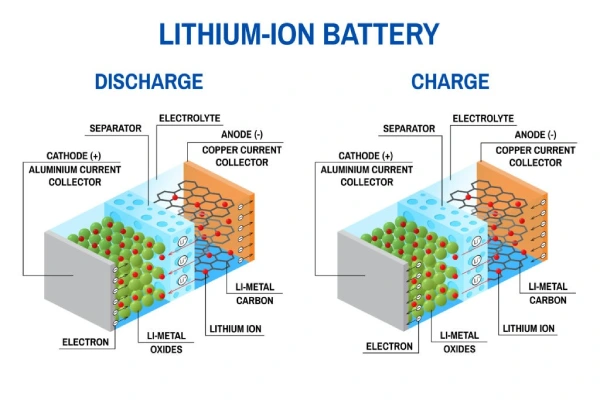
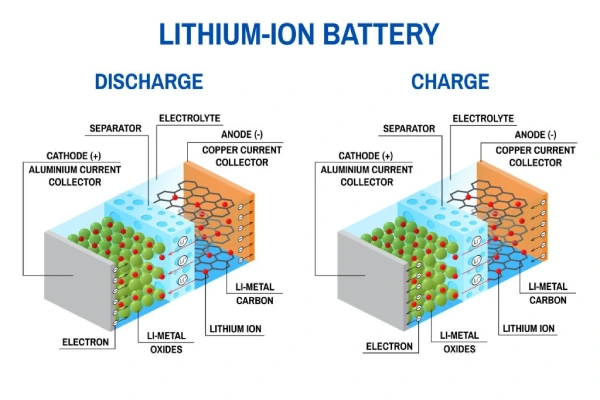
Lithium-ion batteries are rechargeable cells and packs used in phones, laptops, tablets, power tools, e-cigarettes, e-bikes, scooters, drones, medical devices, cameras, energy-storage systems, and electric vehicles. They provide high energy in compact packages, but that energy density also means failures can be energetic.
The central hazard is thermal runaway: a self-heating failure process that can lead to venting, fire, ejection of hot material, and release of flammable or toxic gases. Triggers include crushing, puncture, internal manufacturing defects, overcharge, overheating, incompatible chargers, water damage, severe over-discharge followed by unsafe recharge, and external short circuits.
Loose cells are a common public risk. Cylindrical lithium-ion cells used in e-cigarettes, flashlights, and some power packs may be carried outside protective holders. If terminals contact keys, coins, tools, foil, or other conductive objects, the cell can short. A pocket or bag can then become the failure enclosure, leading to burns and fire. Damaged plastic wraps on cylindrical cells make this more likely because the metal can may become an exposed conductor.
Aviation incident data have long identified lithium batteries as a transport concern. Older summaries cited 138 airport and flight incidents involving lithium batteries from 1991 to 2016, including e-cigarettes, phones, tablets, spare batteries, and laptops. The exact count changes as agencies update incident lists, but the mechanism remains consistent: short circuits, damaged batteries, poor packaging, and failures during transport are recurring causes.
Source: Battery University
Practical lithium-ion precautions include:
- Use products, battery packs, and chargers that are listed or certified by an appropriate testing laboratory when possible.
- Use the charger supplied or specified by the manufacturer.
- Do not charge batteries that are swollen, leaking, crushed, punctured, overheated, submerged, or visibly damaged.
- Stop using a device that becomes unusually hot, emits odor, changes shape, hisses, smokes, or reports repeated charger errors.
- Keep charging devices away from beds, sofas, paper, curtains, and other combustible materials.
- Do not carry loose cells in pockets or bags without a case.
- Protect terminals with caps, individual plastic bags, or original packaging during transport.
- Follow airline rules; spare lithium-ion batteries are commonly required in carry-on baggage rather than checked baggage, subject to size and quantity limits.
Lithium-ion batteries are not inherently unsafe, but they demand electrical protection, mechanical protection, and correct charging.
Primary Lithium Batteries and Shipping Rules
Primary lithium batteries are non-rechargeable lithium cells. They are distinct from rechargeable lithium-ion batteries even though both are often described casually as “lithium batteries.” Primary lithium cells include lithium metal coin cells, camera batteries, military and industrial cells, meter batteries, sensor batteries, memory-backup cells, and long-life batteries for remote equipment.
Their advantages are long shelf life, good low-temperature performance in many designs, and high energy density. Some chemistries, such as lithium thionyl chloride, are selected for very high specific energy and long service life in low-drain industrial applications. Exact specific-energy values vary by manufacturer, construction, cell size, discharge rate, temperature, and cutoff voltage, so a single universal number should not be applied across all lithium thionyl chloride cells.
The main safety rule is that primary lithium cells are generally not rechargeable. Attempting to recharge a non-rechargeable lithium metal cell can cause internal damage, gas generation, leakage, fire, or explosion. These cells can also be hazardous if shorted, crushed, overheated, punctured, burned, or packaged improperly.
Transport rules differ between lithium metal and lithium-ion batteries. They also depend on whether the battery is installed in equipment or shipped separately, the amount of lithium or watt-hour rating, package quantity, air versus ground transport, and whether the battery is damaged or defective. Consumer-level precautions are straightforward:
- Keep cells in retail packaging until needed.
- Prevent terminal contact with metal objects.
- Do not ship loose cells in envelopes or containers where they can move and short.
- Follow carrier instructions for labeling, quantity limits, and packaging.
- Do not ship damaged, swollen, leaking, or recalled lithium batteries through ordinary channels unless a qualified program specifically accepts them.
The term “lithium battery” is not specific enough for safety or shipping decisions. Identify the chemistry and configuration before selecting packaging or transport rules.
How Battery Aging Affects Safety
Aging changes batteries electrically, chemically, and mechanically. Capacity falls, internal resistance rises, voltage behavior becomes less predictable, and heat generation under load may increase. In many devices this appears first as reduced runtime, unexpected shutdown, longer charging time, or poor performance under peak load. In severe cases, aging contributes to swelling, leakage, venting, or fire risk.
Lithium-ion aging deserves particular attention because rechargeable packs are used daily and may remain in service for years. Heat is one of the strongest accelerators. A battery left in a hot vehicle, charged near a heat source, used in a high-current tool, or repeatedly fast charged at elevated temperature can age faster than one operated in moderate conditions. Repeated deep discharge, incompatible charging, physical damage, and long storage at unsuitable state of charge also increase stress.
Over-discharge can create special hazards. In lithium-ion cells driven below the manufacturer’s minimum voltage, copper from the current collector can dissolve into the electrolyte under some abuse conditions. If the cell is later recharged, copper may deposit in ways that increase internal-short risk. This is sometimes described broadly as dendrite-related failure, but the practical point is simpler: a deeply over-discharged lithium-ion cell should not be revived casually. Protected packs normally disconnect before dangerous cell voltages are reached, but bare cells or failed protection circuits remove that safeguard.
Warning signs of unsafe aging or failure include:
- swelling or deformation
- hissing, popping, or venting sounds
- electrolyte leakage
- unusual sweet, solvent-like, metallic, or chemical odor
- excessive heat during use or charge
- smoke
- rapid self-discharge
- cracked casing or torn cell wrap
- repeated charger faults or refusal to charge
If a battery shows these symptoms, stop using it. Unplug the device only if it is safe to do so. Move people away, keep the battery away from combustibles, and isolate it outdoors or on a noncombustible surface when this can be done without handling risk. Do not puncture, crush, open, or attempt to repair the battery. If there is smoke, fire, severe swelling, or active venting, contact emergency services or the appropriate safety authority.
Battery Injury and Incident Statistics
Battery incident statistics should be read as risk context, not as evidence that all batteries are unsafe. Billions of cells are used without incident, but severe cases reveal preventable patterns.
Child injury data consistently identify button and coin cells as a major concern. CDC data estimated 40,400 emergency-department-treated battery injuries among U.S. children under 13 from 1997 through 2010, with button batteries involved in many known battery-type cases and fatal incidents. The most serious outcomes often involve lithium coin cells lodged in the esophagus.
Lithium-ion incidents in public settings often involve loose cylindrical cells. A George Mason University study cited in public safety discussions estimated more than 2,000 U.S. emergency-room visits from explosion-related e-cigarette burn injuries from 2015 to 2017. Many cases involved batteries carried in pants or shirt pockets, sometimes with keys or coins that shorted the terminals. The injury mechanism is direct and severe: the cell releases energy rapidly against skin or clothing before the user can remove it.
Common accident scenarios include:
- spare cells carried loose with metal objects
- torn wraps on cylindrical lithium-ion cells
- counterfeit, mismatched, or low-quality replacement batteries
- chargers not designed for the battery or device
- charging on beds, sofas, paper, or other combustible surfaces
- leaving damaged or swollen batteries in service
- unattended charging of high-energy personal mobility devices
- old alkaline cells left to leak inside equipment
- damaged lead-acid batteries handled without eye and hand protection
The practical interpretation is consistent across chemistries. Protect terminals, keep small cells away from children, use the correct charger, remove damaged batteries from service, avoid heat and physical abuse, and recycle batteries through appropriate channels. Most public battery injuries are not caused by normal storage of intact cells; they arise when stored energy is released through misuse, damage, ingestion, short circuit, or unsafe charging.
References
- Battery University | BU-304c: Battery Safety in Public. (n.d.). http://www.batteryuniversity.com/article/bu-304c-battery-safety-in-public
- About Batteries Safety Guidlines -. (n.d.). https://www.bbif.co.uk/safety-guidlines
- Occoquan-Woodbridge-Lorton Volunteer Fire Department. (n.d.). https://www.facebook.com/OWLVFD/posts/thousands-of-children-are-treated-in-emergency-departments-each-year-after-inges/1381851806628445
- Injuries from Batteries Among Children Aged <13 Years — United States, 1995–2010. (n.d.). https://www.cdc.gov/mmwr/preview/mmwrhtml/mm6134a1.htm
- Lithium-Ion Battery Safety. (n.d.). https://www.nfpa.org/education-and-research/energy-transition/lithium-ion-batteries
- Fatal button battery ingestions: 71 reported cases | Poison Control. (n.d.). https://www.poison.org/battery/fatalcases
- Battery Safety | Environmental Health & Safety (EHS). (n.d.). https://ehs.virginia.edu/Chemical-Safety/Battery-Safety
- Lithium-Ion Battery Safety: Expert Insights & Guidelines. (n.d.). https://www.cirbasolutions.com/lithium-safety
- How to Safely Store Lithium-Ion Batteries: Best Practices & Regulations. (n.d.). https://www.uschemicalstorage.com/how-to-store-lithium-batteries-best-practices
- Toxicology Answer: Ingested Batteries - ACEP Now. (n.d.). https://www.acepnow.com/article/toxicology-answer-battery-ingestion