Battery voltage is simple to read with a meter but easy to misinterpret. The number printed on a cell or pack is usually a nominal rating, not the exact voltage the battery will produce at every state of charge, temperature, or load current. A 12 V lead acid battery does not sit at exactly 12.0 V when fully charged, and a 3.7 V lithium-ion cell is not charged to 3.7 V.
The confusion comes from mixing several different voltage concepts: nominal voltage, open-circuit voltage, voltage under load, float voltage, charge voltage, and end-of-discharge voltage. These values are related, but they are not interchangeable. Correct interpretation matters when selecting replacements, designing chargers, estimating state of charge, or comparing pack energy in watt-hours.
Battery Voltage Basics: Nominal, Open-Circuit, and Loaded Voltage
A battery is an electrochemical device. It creates a voltage potential through chemical reactions between electrode materials and an electrolyte. The exact voltage is determined mainly by the electrochemistry, but the voltage observed at the terminals also depends on operating conditions.
Nominal voltage is a standardized reference value. It is the convenient voltage used to identify a cell or pack class, compare chemistries, and calculate approximate pack ratings. It is not the maximum voltage, the minimum voltage, or necessarily the voltage a meter will show at a given moment.
Open-circuit voltage, often abbreviated OCV, is the terminal voltage measured when the battery is not connected to a load or charger. For OCV to be meaningful, the battery should be at rest. Immediately after charge or discharge, surface charge, concentration gradients, and internal electrochemical settling can make the terminal voltage temporarily higher or lower than its stabilized value. Depending on chemistry, battery size, and recent use, a battery may need a rest period before the voltage stabilizes; the reference source notes that this can be up to 24 hours.
Closed-circuit voltage, or CCV, is the terminal voltage while current is flowing. During discharge, CCV is normally lower than rested OCV because current through the battery internal resistance causes voltage drop. During charging, the measured terminal voltage is normally higher than rested OCV because the charger must apply voltage to drive current into the cell.
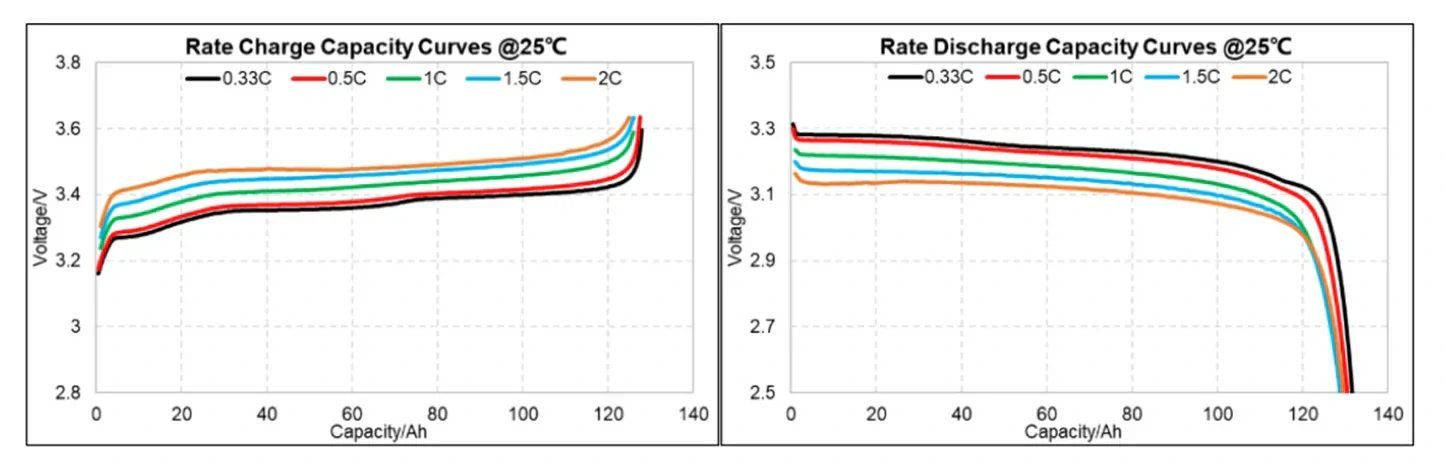
Source: Battery University
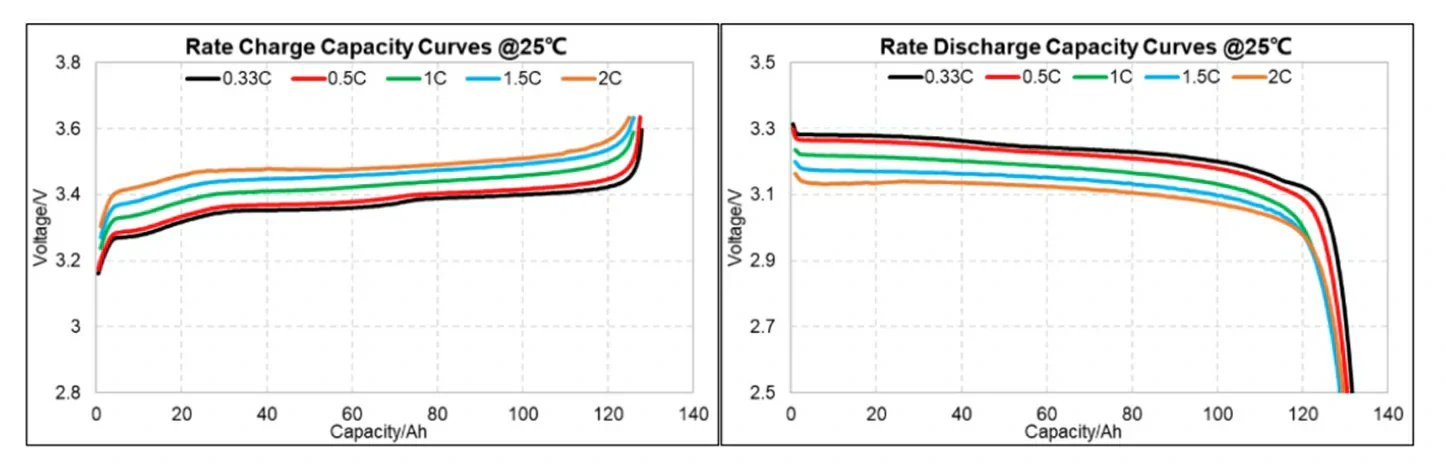
Several factors explain why a battery does not hold one fixed voltage:
- State of charge: Terminal voltage generally changes as stored charge is removed or restored, although the shape of the voltage curve varies widely by chemistry.
- Internal resistance and impedance: Higher current produces more voltage drop under load. Aging, low temperature, sulfation, and cell design can all affect impedance.
- Recent charge or discharge history: A just-charged battery can show a temporarily elevated voltage, while a heavily loaded battery may recover upward after the load is removed.
- Temperature: Temperature affects electrochemical reaction rates, internal resistance, voltage behavior, and available capacity. A cold battery may deliver less usable capacity and show greater voltage sag under load.
- Cell matching in packs: In a series pack, the total voltage is the sum of cell voltages. Weak or imbalanced cells can make pack voltage misleading.
A useful engineering habit is to always ask which voltage is being discussed. A nameplate voltage, a rested OCV reading, a charger setpoint, and an under-load operating voltage may all be correct at the same time, but they describe different operating states.
| Voltage term | What it means | Typical use |
|---|---|---|
| Nominal voltage | Standard reference voltage for a chemistry or pack | Device rating, pack naming, approximate watt-hour calculation |
| Open-circuit voltage | Rested no-load terminal voltage | State-of-charge estimation and diagnostics, with chemistry-specific tables |
| Closed-circuit voltage | Terminal voltage while charging or discharging | Real operating voltage under load or charge |
| Float or charge voltage | Charger-controlled voltage in a charging system | Maintaining or charging the battery according to chemistry requirements |
Lead Acid Voltage Ratings
Lead acid cells are conventionally rated at 2.0 V nominal per cell. A common 12 V lead acid battery contains six cells in series, so its nominal pack voltage is 12.0 V. This is a naming convention rather than a statement that a healthy battery always measures exactly 12.0 V.
A fully charged and rested lead acid cell is commonly around 2.1 V per cell open circuit. For a six-cell battery, this corresponds to roughly 12.6 V at rest. This rested voltage is higher than the nominal rating but lower than the voltage normally seen during charging.
Lead acid systems also use higher charger voltages. The reference source notes that lead acid measures about 2.25 V per cell on float charge, and higher during normal charge. Float voltage is not the same as nominal voltage or rested OCV. It is a charger-maintained condition intended to keep the battery charged in standby service. Actual charging limits and temperature compensation depend on battery design and manufacturer instructions.
The distinction matters because lead acid batteries are sensitive to long-term undercharge. Keeping a lead acid cell much below its fully charged voltage for extended periods promotes sulfation, a condition in which lead sulfate becomes more difficult to convert back during normal charging. Sulfation reduces capacity and can increase internal resistance.
For practical interpretation:
- 2.0 V per cell is the nominal lead acid rating.
- About 2.1 V per cell rested indicates a charged lead acid cell in the reference convention.
- About 12.6 V rested is typical for a fully charged six-cell 12 V lead acid battery.
- Float and charge voltages are higher than rested OCV and must not be treated as normal open-circuit battery voltage.
This is why a 12 V lead acid battery that reads 12.6 V at rest is not overvoltage simply because it exceeds 12.0 V. Conversely, a lead acid battery that reads near its nominal voltage may not be fully charged. Voltage alone should be interpreted with rest time, temperature, load history, and the battery manufacturer’s data in mind.
Nickel-Based Battery Voltage Ratings
Nickel-cadmium, or NiCd, and nickel-metal hydride, or NiMH, cells have lower cell voltage than lead acid or lithium-ion cells. In consumer applications, both NiCd and NiMH cells are commonly labeled 1.20 V per cell nominal.
Some industrial, aviation, and military applications use the older 1.25 V per cell convention. This difference in marking does not mean that a 1.20 V nickel-based cell and a 1.25 V nickel-based cell are fundamentally different electrochemical systems. It reflects rating preference and historical convention.
Nickel-based cells may show a higher terminal voltage when fully charged. For example, a freshly charged NiMH cell can measure above its nominal rating. That does not change the nominal rating used for pack identification. The nominal value remains the standard reference used for comparing cells and building packs.
This can cause confusion when replacing cells in equipment that was originally specified around nickel-based chemistry. A device designed for four NiMH cells is commonly designed around a nominal pack voltage of about 4.8 V when using the 1.20 V convention. Under real operation, the voltage will vary with charge state and load. A lithium-ion replacement of similar physical size may have a very different voltage and charging requirement, so it should not be substituted simply because it fits mechanically.
The key point is that nickel-based voltage labels are conventions:
| Nickel-based cell type or application | Common nominal label |
|---|---|
| Consumer NiCd | 1.20 V per cell |
| Consumer NiMH | 1.20 V per cell |
| Some industrial, aviation, and military nickel-based batteries | 1.25 V per cell |
When servicing nickel-based packs, the charger type is also important. Nickel-based cells use charging methods and termination behavior different from lithium-ion cells. Voltage compatibility and charger compatibility should be checked together, not separately.
Lithium-Ion Voltage Ratings and Chemistry Differences
Lithium-ion voltage ratings are a common source of confusion because the term lithium-ion covers multiple chemistries and because cells are often marketed with slightly different nominal voltage labels.
Many lithium-ion cells are conventionally rated around 3.6 V nominal per cell. Some are marketed or labeled as 3.7 V per cell or higher. The difference may appear small, but it affects pack voltage labels and watt-hour calculations. Watt-hours are calculated from voltage and amp-hours, so using a higher nominal voltage increases the stated energy rating on paper when the amp-hour rating is unchanged.
For series packs, the labeling difference is easy to see:
| Cells in series | Using 3.6 V nominal | Using 3.7 V nominal |
|---|---|---|
| 3 cells | 10.8 V | 11.1 V |
| 4 cells | 14.4 V | 14.8 V |
These labels can describe similar pack arrangements while using different nominal-voltage conventions. The actual operating voltage still changes continuously across the charge and discharge range.
Lithium-ion cell voltage depends on electrode materials, cell chemistry, impedance, state of charge, and manufacturer specifications. Common lithium-ion chemistries based on cobalt, nickel, manganese, or aluminum oxide systems, often discussed as LCO, NMC, or NCA-style cells, are commonly rated around 3.6 V to 3.7 V nominal. Lithium iron phosphate, or LiFePO4, is different and is commonly rated around 3.2 V nominal per cell.
Full-charge voltage also differs by chemistry. Many conventional lithium-ion cells are charged to about 4.2 V per cell as a typical example. LiFePO4 cells are commonly associated with about 3.65 V per cell as a full-charge example. These values are context, not universal permission to charge every cell to those voltages. Exact maximum voltage, minimum voltage, charge current, temperature limits, and protection requirements must come from the manufacturer’s datasheet and the pack design.
Voltage compatibility is especially important with lithium-ion because the charger and protection electronics are normally designed for a specific series cell count and chemistry. A charger intended for a conventional 4.2 V-per-cell lithium-ion chemistry is not automatically suitable for LiFePO4, and a device designed around a 3.2 V nominal LiFePO4 cell may not tolerate a 3.6 V or 3.7 V nominal cell. Likewise, a pack labeled 14.4 V, 14.8 V, or another nearby value should not be assumed compatible without checking cell count, chemistry, charge limit, connector wiring, protection circuitry, and device voltage range.
For selection and troubleshooting, treat lithium-ion labels as shorthand, not complete specifications:
- 3.6 V and 3.7 V labels often represent nominal-voltage convention for similar lithium-ion classes.
- Watt-hour ratings depend on the voltage value used in the calculation as well as the amp-hour rating.
- LiFePO4 is not voltage-equivalent to many conventional lithium-ion chemistries on a per-cell basis.
- Full-charge voltage is chemistry-specific and must match the charger and battery-management system.
- Series count determines pack voltage, so one cell of difference in series count is a major electrical change.
In engineering practice, the safest reading of any lithium-ion voltage label is that it identifies a design class, not a full operating envelope. The complete voltage limits belong in the datasheet, charger specification, and battery-management-system design. Matching those requirements prevents the common mistake of treating batteries with similar physical size or similar marketing voltage as direct substitutes.
References
- Battery University | BU-303: Confusion with Voltages. (n.d.). http://www.batteryuniversity.com/article/bu-303-confusion-with-voltages
- Battery Nominal Voltage: Definition, Standards, and System Application – TYCORUN. (n.d.). https://tycorun.com/blogs/news/battery-nominal-voltage
- Battery Nominal Voltage: Definition, Standards, and System Application – TYCORUN. (n.d.). https://www.tycorun.com/blogs/news/battery-nominal-voltage
- What Sets NiCad, NiMH, and Lithium-Ion Batteries Apart. (n.d.). https://www.wonderfulpcb.com/blog/rechargeable-battery-compatibility-nicad-nimh-lithium-ion
- NiMH (Nickel-Metal-Hydride) Battery: A Complete Guide. (n.d.). https://www.ersaelectronics.com/blog/nimh-nickel-metal-hydride-battery-a-complete-guide
- Lithium-Ion Battery Cell Voltage: What You Need to Know. (n.d.). https://www.eblofficial.com/blogs/blog/lithium-ion-battery-cell-voltage
- Three performance factors you must consider when sizing ...Battery Open-Circuit Voltage to State of Charge (S... - ToolYKP Battery Specifications OverviewGrounding Negative SystemWhat is the voltage of the battery? - Park (ing) DaySAND2004-3149 - OSTI.GOV. (n.d.). https://electrical-engineering-portal.com/performance-factors-sizing-batteries
- All About Lithium Ion Battery Voltage — A Simple Explanations - TYCORUN Energy. (n.d.). https://www.tycorunenergy.com/lithium-ion-battery-voltage
- Battery Knowledge. (n.d.). https://www.batteryspace.com/batteryknowledge.aspx
- How Does a Battery Produce Electricity? Capacity & Output Math | ElectricalFlux. (n.d.). https://electricalflux.com/wire-fundamentals/calculate-battery-electricity-production-math