Primary batteries are single-use electrochemical cells that deliver stored chemical energy without recharging. They remain important because they are simple, widely available, and often have long shelf life compared with many rechargeable systems. The right choice depends on voltage, load current, storage time, temperature, safety constraints, leakage tolerance, and replacement cost.
The common 1.5V consumer cell family begins with zinc-carbon, also called carbon-zinc or Leclanché-type technology. It is one of the earliest and lowest-cost primary battery systems. Alkaline-manganese cells improved on zinc-carbon by offering better service life, leakage resistance, and general-purpose performance while keeping the familiar 1.5V format.
Lithium primary batteries extend the range further. Lithium iron disulfide provides a 1.5V drop-in option for many high-drain AA and AAA applications. Industrial lithium chemistries such as lithium thionyl chloride, lithium manganese dioxide, and lithium sulfur dioxide offer higher voltage, higher specific energy, or wider temperature operation, but also require stricter handling and transport attention.
Everyday 1.5V Primary Cells: Zinc-Carbon and Alkaline
Zinc-carbon and alkaline batteries are the familiar cylindrical cells used in many household devices. Both are primary 1.5V systems, both are sold in standard consumer sizes, and both are replaced rather than recharged. Their behavior differs enough that they should not be treated as interchangeable in every design.
Zinc-carbon is the older, lower-cost option. It suits light or intermittent loads where energy demand is modest and replacement cost matters more than capacity. Alkaline-manganese is the improved general-purpose successor, normally providing better capacity, shelf life, and leakage resistance, making it the default choice for most consumer devices.
For designers, the key question is not simply whether a cell is labeled 1.5V. The discharge curve, allowable load current, leakage risk, storage conditions, and end-of-life behavior determine whether the chemistry is appropriate.
Zinc-Carbon and the Leclanché Legacy
Zinc-carbon cells are also described as carbon-zinc or Leclanché batteries. The Leclanché name reflects the historical wet-cell chemistry developed by Georges Leclanché in the nineteenth century. The supplied reference notes a wet zinc-carbon cell by Leclanché in 1859, while the Leclanché cell is commonly associated with the mid-1860s in battery history. In practical use, zinc-carbon is an early, low-cost primary battery family that preceded alkaline as the common consumer standard.
A zinc-carbon cell delivers a nominal 1.5V. It is inexpensive and is still often supplied with low-cost consumer products such as simple remotes, toys, clocks, flashlights, or packaged electronics. Its low price is useful when the device has a very light load or when the included battery is mainly intended for demonstration or initial operation.
Its limitations become clear under heavier loads. Compared with alkaline, zinc-carbon generally has lower usable capacity, poorer high-drain performance, and greater sensitivity to storage and discharge conditions. It is a poor choice for devices that draw sustained current, operate motors, use bright lamps, or must run reliably after long storage.
Alkaline-Manganese as the Improved Consumer Standard
Alkaline-manganese, usually shortened to alkaline, is also a zinc-based primary chemistry with a nominal 1.5V output. It improved on zinc-carbon by using an alkaline electrolyte and manganese dioxide cathode system that provides better performance in many everyday products.
The supplied reference attributes the alkaline battery invention to Lewis Urry in 1949 while he was working at the Eveready Battery Company. Modern commercial alkaline cells evolved from this development into the dominant general-purpose disposable battery used in household devices.
Alkaline cells are common in:
- remote controls and clocks
- flashlights and lanterns
- toys and wireless peripherals
- portable radios and audio products
- household medical and measurement devices
- general portable electronics with moderate current demand
Their strengths are broad availability, economical pricing, a good safety record, and long storage life. Many modern alkaline cells are sold with shelf-life ratings around 10 years, although actual performance depends on manufacturer, storage temperature, cell size, and leakage resistance.
Alkaline is not always the best answer. In high-drain devices, especially cameras, powerful LED lights, or equipment used in cold weather, lithium iron disulfide may deliver better service. In very low-drain industrial systems that must operate for years without access, lithium thionyl chloride or lithium manganese dioxide may be more suitable.
Gas Generation, Leakage, and Device Design
Primary cells are often considered simple components, but they can produce hydrogen gas under some conditions. Gas generation is associated with electrochemical side reactions, poor storage, over-discharge, internal corrosion, or abuse. The risk depends on chemistry, construction, quality, temperature, and end-of-discharge behavior.
Device designers should avoid assuming that a battery compartment can be completely airtight. A sealed enclosure may trap gas or leaked electrolyte, while an excessively open design may expose cells to moisture or contamination. The correct approach depends on product environment, applicable safety standards, and the battery manufacturer’s guidance.
Leakage is also a practical design issue. Alkaline cells generally have better leakage resistance than zinc-carbon, but no consumer primary cell should be treated as leak-proof. Long storage in a device, high temperature, deep discharge, reversed cells in a multi-cell pack, and mixing old and new cells can all increase risk.
Practical measures include:
- using the chemistry recommended for the expected load
- designing contacts and plastics to tolerate minor contamination where feasible
- avoiding unnecessary parasitic drain during storage
- preventing cell reversal in series strings
- providing user instructions for long-term storage
- avoiding attempts to recharge primary cells
Lithium Iron Disulfide (LiFeS2) for High-Drain Consumer Devices
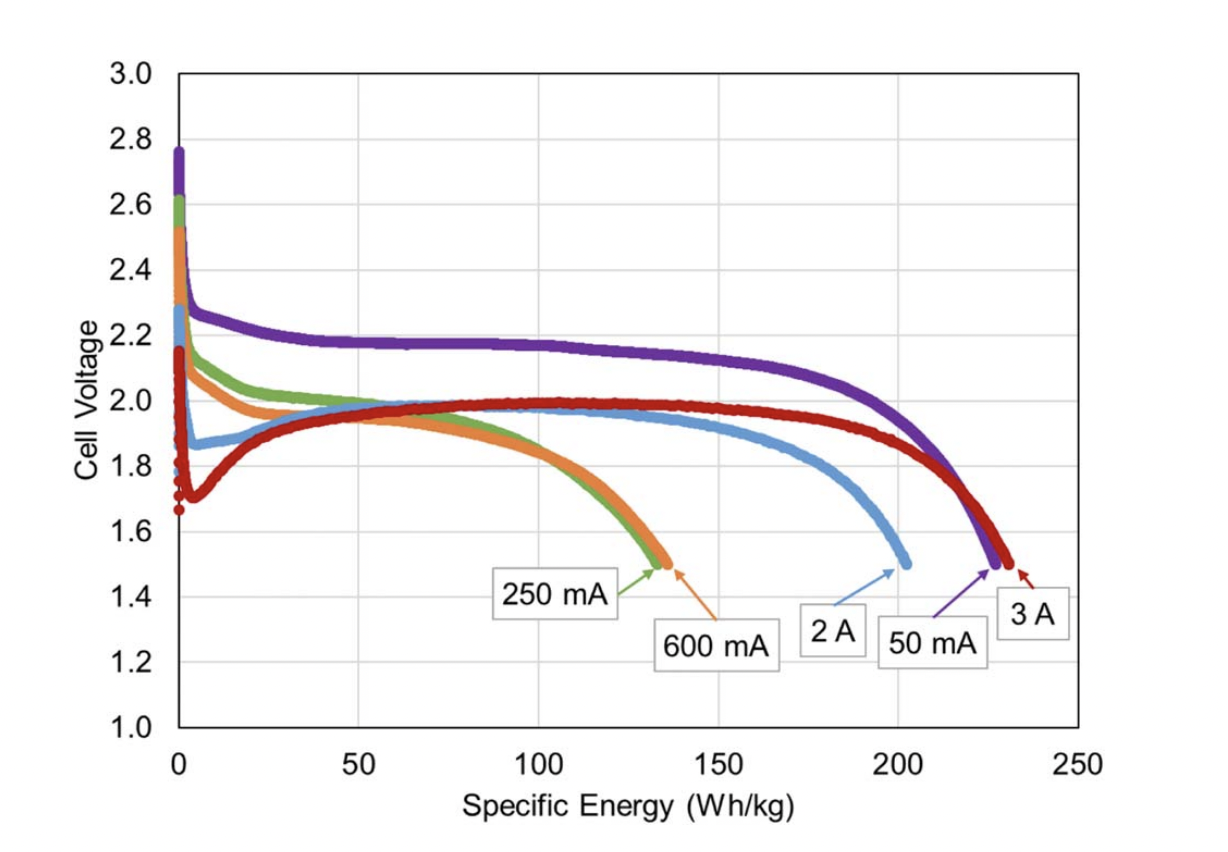
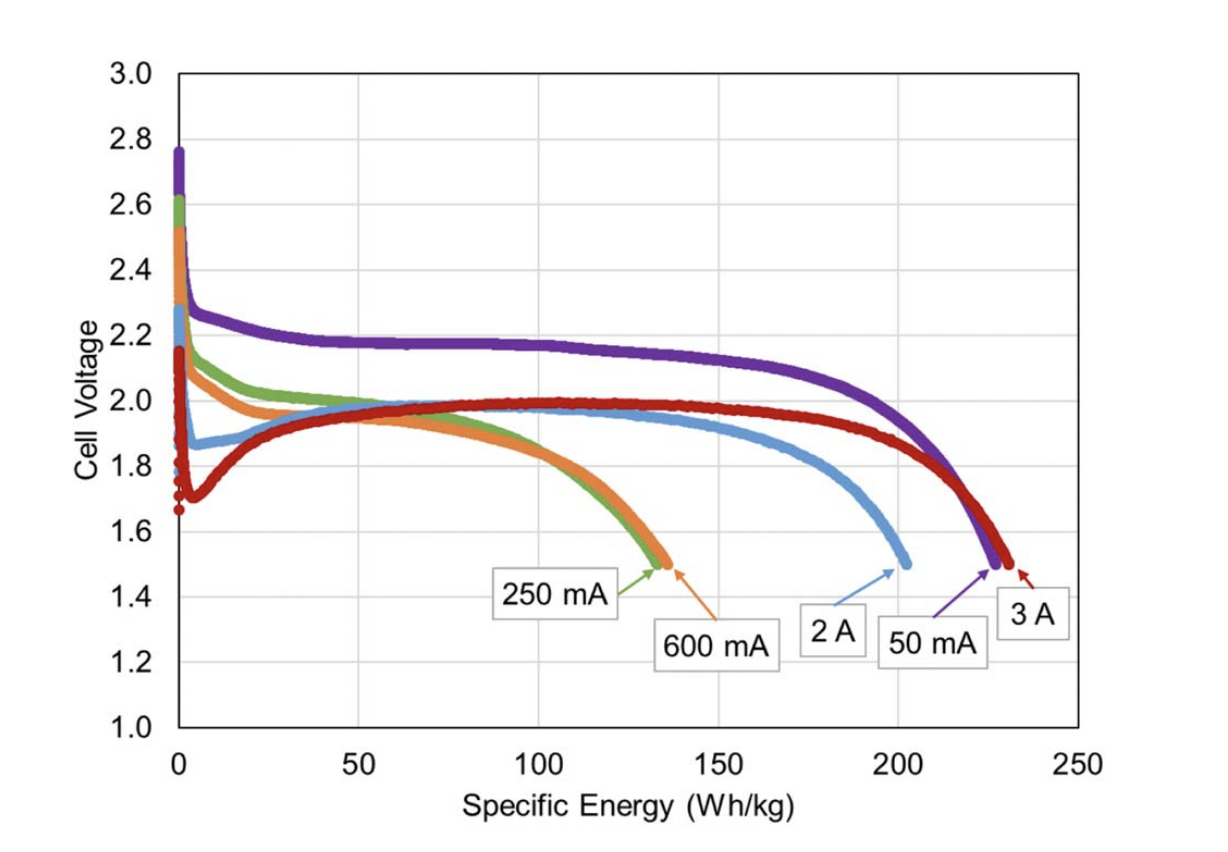
Lithium iron disulfide, commonly written LiFeS2, is a lithium-metal primary chemistry that delivers a nominal 1.5V. This makes it useful in AA and AAA formats where a device expects alkaline-cell voltage but needs better high-drain or cold-temperature performance.
LiFeS2 cells are typically lighter than alkaline cells and can provide higher specific energy. The supplied comparison value is about 300Wh/kg, compared with about 200Wh/kg for alkaline. Manufacturer-specific values vary by cell size, design, discharge rate, and test conditions, but LiFeS2 is generally the higher-performance 1.5V primary option.
Source: Original source
LiFeS2 is especially useful in:
- digital cameras and photo equipment
- high-drain toys and instruments
- outdoor electronics used in cold weather
- portable lighting where weight matters
- emergency equipment stored for long periods
The chemistry also offers long shelf life. The supplied reference comparison lists about 15 years, subject to manufacturer and storage conditions. This makes LiFeS2 attractive for emergency kits and infrequently used equipment where ordinary alkaline cells might lose capacity or leak during storage.
The disadvantages are cost and transport classification. LiFeS2 cells are more expensive than alkaline cells, and because they are lithium-metal batteries, they fall under lithium battery transport rules when shipped commercially or in quantity. They are not rechargeable. Attempting to recharge a primary lithium-metal cell can create unsafe conditions.
Lithium-Metal Safety, Passivation, and Transport Rules
Primary lithium batteries are generally lithium-metal batteries, not rechargeable lithium-ion cells. The distinction matters. Lithium-ion cells store lithium in intercalation materials and are designed for repeated charging under controlled conditions. Primary lithium-metal cells contain metallic lithium and are designed for one discharge cycle.
Several lithium primary chemistries develop a passivation layer during storage. At a high level, passivation is a protective film on the lithium surface that slows self-discharge and helps provide long shelf life. In some chemistries, especially industrial lithium systems, this film can cause voltage delay when the cell is first placed under load after storage. The voltage may initially sag before recovering as current breaks down the passivation layer.
Passivation can be beneficial or problematic depending on the application. A remote meter that wakes briefly once per hour may benefit from low self-discharge, but a high-pulse transmitter may need cells selected and tested for pulse capability after storage.
Transport rules are another important difference. Lithium-metal batteries may face stricter air-shipping and dangerous-goods controls than alkaline batteries, particularly when shipped as loose cells, in bulk quantities, damaged or defective units, or high-lithium-content industrial cells. Commercial shipments commonly require attention to packaging, labeling, documentation, cell condition, and carrier procedures.
This does not mean every consumer lithium primary cell is prohibited on aircraft. Passenger carry-on rules, batteries installed in equipment, spare consumer cells, air cargo shipments, and industrial bulk shipments are treated differently. Current DOT, FAA, IATA, and carrier guidance should be checked for the exact cell type, lithium content, package configuration, and shipping route.
Lithium Thionyl Chloride (Li-SOCl2) for Long-Life Industrial Use
Lithium thionyl chloride, commonly written Li-SOCl2 or LTC, is an industrial primary lithium chemistry known for very high specific energy and long storage life. The supplied comparison table lists about 500Wh/kg and a nominal voltage range around 3.6–3.9V. Actual values depend on cell construction, discharge rate, temperature, and manufacturer.
LTC cells are widely used where the main requirement is long unattended operation. Typical applications include:
- utility meters
- remote sensors
- memory backup
- asset tracking devices
- industrial electronics
- security and monitoring systems
The major strengths are low self-discharge, long shelf life, and high energy per unit mass. The supplied table gives a shelf-life range of 10–20 years, aligning with use in remote equipment where replacement is expensive.
However, lithium thionyl chloride is not a consumer convenience battery. It requires proper safety precautions, correct current-limiting design, and attention to passivation. Standard bobbin-style LTC cells are often optimized for low continuous current and very long life, while spiral-wound designs may support higher current. A design that needs large pulses may require a hybrid capacitor, parallel pulse support, or a cell specifically rated for that load profile.
LTC cells must not be recharged. They also fall under lithium-metal transport controls, and industrial cell formats may be subject to stricter shipping treatment than small consumer cells. Product designers should select cells using manufacturer datasheets rather than relying only on nominal chemistry values.
Lithium Manganese Dioxide (Li-MnO2) for Stable 3V Primary Power
Lithium manganese dioxide, commonly written Li-MnO2 or Li-M, is a common 3V-class primary lithium chemistry. It is widely used in cylindrical, prismatic, coin, and button cell formats. The supplied reference values are about 280Wh/kg, roughly 3.0–3.3V, and 10–20 years of shelf life depending on design and storage.
Li-MnO2 is often chosen where a stable 3V primary source is needed with good shelf life and a more favorable safety profile than more hazardous industrial lithium chemistries. It is common in:
- cameras and photographic equipment
- memory backup circuits
- security devices
- utility meters
- medical devices
- coin-cell powered electronics
- remote controls and small instruments
The familiar CR-series coin cells are examples of lithium manganese dioxide chemistry in many consumer and embedded applications. They provide compact 3V power with low self-discharge, making them useful for real-time clocks, configuration memory, and low-drain wireless products.
Li-MnO2 is generally regarded as a safer and more widely adopted lithium primary option than chemistries that require stronger precautions, but it is still a lithium-metal system. It should not be recharged, short-circuited, overheated, crushed, or shipped without observing applicable lithium battery rules.
Lithium Sulfur Dioxide (Li-SO2) and Military/Specialty Use
Lithium sulfur dioxide, written Li-SO2, is a 2.8V primary lithium chemistry with a history in military and specialty applications. The supplied reference lists energy density up to about 330Wh/kg, a projected room-temperature shelf life of 5–10 years, and a wide operating temperature range around -54°C to 71°C.
Those attributes made Li-SO2 useful where equipment had to operate over severe temperature conditions and deliver moderate power from a lightweight primary source. Military electronics, field equipment, and certain industrial devices have used the chemistry for those reasons.
Li-SO2 also carries safety precautions and usage restrictions. It is not as broadly used in consumer products as alkaline, LiFeS2, or Li-MnO2. The supplied reference notes that lithium sulfur dioxide has been displaced in many applications by lithium manganese dioxide, which offers a more favorable balance for many primary lithium uses.
In modern selection work, Li-SO2 is best treated as a specialty chemistry. It may be appropriate where legacy equipment, military specifications, or environmental requirements call for it, but it should not be substituted casually into consumer or industrial designs without cell-specific qualification and transport review.
Choosing Among Primary Battery Chemistries
Primary battery selection is a tradeoff among voltage, energy, power, shelf life, safety, cost, temperature range, and logistics. No single chemistry is best for every use.
| Chemistry | Nominal voltage | Supplied specific-energy comparison | Typical role | Main cautions |
|---|---|---|---|---|
| Zinc-carbon | 1.5V | Not listed in supplied table | Very low-cost light-load devices | Lower capacity and poorer high-drain performance |
| Alkaline | 1.5V | About 200Wh/kg | General-purpose consumer devices | Limited high-drain and cold-weather performance compared with lithium options |
| LiFeS2 | 1.5V | About 300Wh/kg | High-drain AA/AAA consumer devices | Higher cost; lithium-metal transport considerations |
| Li-SOCl2 | 3.6–3.9V | About 500Wh/kg | Long-life industrial meters and sensors | Passivation, safety precautions, shipping controls |
| Li-MnO2 | 3.0–3.3V | About 280Wh/kg | Stable 3V primary power, coin cells, memory backup | Lithium-metal handling and transport rules |
| Li-SO2 | 2.8V | Up to about 330Wh/kg | Military and specialty temperature applications | Precautions and narrower adoption |
For low-cost household products, alkaline is usually the practical starting point. Zinc-carbon may be acceptable only when the load is light and short service life is tolerable. For high-drain consumer devices that use AA or AAA cells, LiFeS2 often provides better runtime, lower weight, and better cold-temperature behavior.
For long-life industrial equipment, replacement labor may cost far more than the cell itself, so shelf life and self-discharge dominate the economics. Li-SOCl2 is strong where extremely long unattended life and high energy are required. Li-MnO2 is attractive where a stable 3V source, good shelf life, and broad availability are more important than maximum energy density.
Other primary chemistries also matter in specialized formats. Silver oxide cells are important in watches, calculators, and small instruments that need compact cells with stable voltage. Zinc-air cells are widely used in hearing aids because they use oxygen from air as a reactant and can provide high energy in a small button-cell format, although they require air access after activation.
A practical selection process should begin with the device requirements:
- Define the voltage range the electronics can tolerate from fresh cell to end of life.
- Estimate continuous, pulse, sleep, and leakage currents.
- Check operating and storage temperature limits.
- Set shelf-life and replacement-interval requirements.
- Evaluate leakage, venting, and enclosure constraints.
- Confirm safety, certification, and transport requirements.
- Compare total cost, including replacement labor and field failures.
Primary batteries are most successful when the chemistry is matched to the load profile and environment. A cheap cell in the wrong application can cause poor runtime or leakage; an industrial lithium cell in the wrong design can create passivation, safety, or shipping problems. The best choice satisfies the electrical load, storage interval, temperature range, safety constraints, shipping rules, and replacement economics together.
References
- Battery University | BU-106a: Choices of Primary Batteries
- BU-106a: Choices of Primary Batteries
- Battery University | BU-106: Advantages of Primary Batteries
- Battery University | BU-106: Advantages of Primary Batteries
- Primary Batteries: Complete Guide for Electrical Students and Beginners
- Primary Battery - Hollingsworth & Vose
- Primary and Rechargeable Battery Chemistries with Energy Density
- Battery categories and chemistries primer
- Primary Batteries | Non Rechargeable Battery | EaglePicher
- Three Main Types of Primary Batteries