Deep-cycle batteries are used in equipment and systems that must deliver sustained energy over an operating period. Examples include wheeled mobility equipment, floor-cleaning machines, people movers, backup systems, and other industrial applications. In these systems, battery condition can become the limiting factor in overall reliability: a battery may accept a charge and show normal voltage while no longer storing enough usable energy for the required duty.
Capacity fade is therefore an important indicator of battery health. A practical maintenance program does not need to treat every battery as simply good or bad. It can define a minimum operational energy reserve, test batteries against that requirement, and assign them to suitable work. Rapid, non-invasive diagnostics can support this process by identifying batteries that remain fit for full-duty service, those better suited to reduced-duty applications, and those that should be removed or replaced.
Setting Capacity Thresholds for Mission Readiness
A capacity threshold is an operational decision point. It defines the minimum estimated usable capacity required for a particular assignment. Batteries above the selected threshold may be released for the intended duty; batteries below it may require reassignment, further evaluation, or replacement. A passing result does not guarantee a particular runtime under every condition, but it can show that the battery remains within the capacity range selected for the application.
The threshold should be connected to the job rather than treated as a universal property of the battery. A machine expected to complete a long shift with little opportunity to recharge requires more reserve than equipment used intermittently near a charging station. Temperature, load profile, battery age, duty cycle, and the consequences of an in-service failure also affect the appropriate limit.
Rapid battery testers can estimate capacity using a reference matrix. The instrument applies a small electrical excitation and measures the battery response across a range of frequencies. The resulting impedance characteristics are compared with data collected from batteries of the same model or from batteries with sufficiently similar construction and behavior. The comparison can estimate capacity and related characteristics without performing a long, destructive discharge test.
The quality of this approach depends on the matrix. A matrix built from too few batteries, or from batteries covering only a narrow range of state of health, may not represent the population being tested. A useful matrix should include representative batteries with different levels of capacity fade and relevant operating conditions. Additional measurements from the same model can improve the reference range and help expose weaknesses in the model.
The Battery University material describes Matrix Integrity Level as an indicator associated with the quality and coverage of a matrix. Matrix libraries can provide reference data for multiple battery models, with availability depending on the instrument, software, and service arrangement. Operators should confirm which matrices are installed or available, how they are selected, and whether the tested battery falls within the model’s validated scope.
For the Spectro Modular information supplied here, capacity testing is listed for 27–150 Ah batteries, with test results available in under 30 seconds under the stated operating conditions. Its listed excitation range is 16–2,048 Hz, with lower-frequency testing possible at longer test times. These figures belong to that product configuration and should not be generalized to every Spectro device or every battery chemistry.
A rapid result is best used for screening and maintenance decisions. When a result is close to a release threshold, unexpected, or outside the instrument’s validated range, confirm it with an appropriate capacity test or application-specific evaluation.
Checking Battery and Pack Matching
A connected battery string or pack is constrained by its weakest usable unit. In a series string, the lowest-capacity or most degraded battery can reduce practical runtime even when the other batteries remain strong. It may also reach an undesirable state of charge earlier than its neighbors, increasing imbalance and making the system less predictable.
Matching is most useful when performed under comparable conditions. For example, batteries can be fully serviced and charged using the same procedure, placed under comparable conditions, and then compared using a validated measurement such as post-service state of charge, estimated capacity, internal resistance, or another application-relevant metric. The measurement should be interpreted consistently; a single reading taken at different temperatures or different points in the charge cycle may not provide a fair comparison.
A commonly cited guideline is that a well-matched string should show no more than about 10% variation in the selected comparison measure. This is not a universal acceptance limit. The appropriate tolerance depends on the chemistry, pack design, battery-management system, operating conditions, and manufacturer’s requirements. It should be validated for the specific application before being used as a release rule.
When replacing a weak unit, nominal ampere-hour capacity is only one consideration. The replacement should also be compatible with:
- battery chemistry and charging requirements;
- voltage and physical configuration;
- age and expected remaining service life;
- measured condition and internal resistance;
- operating history, including temperature and depth of discharge; and
- the electrical and mechanical requirements of the pack.
Replacing one degraded battery with a unit of similar nominal capacity may not restore balance if the new battery has a different age, chemistry, condition, or charge behavior. In some applications, replacing a matched group is more appropriate than replacing a single battery. The decision should follow the pack manufacturer’s instructions and the system’s safety requirements.
Operating the Diagnostic System and Reporting Results
A typical diagnostic workflow begins with entering test settings through the instrument or a connected host device. Settings may include the selected battery model or matrix, asset identification, and other information required by the test method. Correct battery identification matters because a matrix developed for one construction or chemistry should not automatically be applied to another.
Results can be presented as numerical values, status messages, or graphical information. Depending on the instrument and configuration, the operator may review estimated capacity, state of charge, internal resistance, temperature, voltage, and indications of abnormal behavior. The result should be considered together with the battery’s visual condition, charging history, and the operating requirements of the equipment.
Local and cloud-connected workflows serve different purposes. In local operation, test records remain on the host device or tester, subject to its storage capacity and backup procedures. A connected service can allow records to be synchronized or shared for fleet supervision, provided that the required account, network connection, subscription, and data policies are in place.
Shared records can help maintenance coordinators identify batteries approaching a threshold, compare assets, assign work, and document service decisions. Possible record fields include battery status, charge level, internal resistance, temperature, vehicle or asset identification, and work-order information. The exact fields depend on the product and software version, so they should be confirmed before designing a maintenance database around them.
Some systems can produce printed reports or labels, including labels containing an asset identifier or QR code. Printer models, label formats, and connection methods are product-specific. Cloud use also requires attention to account ownership, user permissions, connectivity, retention, and privacy. A fleet should have a defined procedure for exporting or preserving records if a device, account, or service connection becomes unavailable.
Using Historical Battery Test Data
A persistent identifier connects the physical battery with its digital service history. A QR code attached to the battery is one possible method. When supported by the diagnostic workflow, scanning the code can retrieve earlier results and the configuration used for previous tests. This reduces manual data entry and helps prevent a battery from being tested against the wrong model or matrix.
Repeat testing is more valuable when the new result is added to the same battery record. Over time, the record can show capacity estimates, state of charge, internal resistance, temperature, and other measured values. A series of comparable tests is more useful than isolated results because it can reveal gradual degradation, an abrupt change after an operating event, or a result inconsistent with the battery’s history.
Historical data can support several maintenance decisions:
- identifying batteries that are declining faster than similar units;
- scheduling replacement before a critical assignment;
- checking whether a charging or temperature problem affected a group;
- verifying that a service action produced the expected improvement; and
- selecting stronger batteries for applications with greater reserve requirements.
The matrix library is important when a fleet contains multiple battery models or types. A broad library can reduce the need to create an entirely new reference model for every test location, but library coverage does not prove that every battery is supported. Operators should verify chemistry, model, voltage, capacity range, test conditions, and matrix compatibility.
Synchronization behavior also matters. Before relying on a cloud history, confirm whether records can be viewed offline, when new results are uploaded, how conflicts are handled, who owns the data, and how records can be exported. A QR code identifies the battery; it does not by itself guarantee that the associated history will be available without the appropriate software or network access.
Selecting Capacity Thresholds by Mission Criticality
Different missions require different reserves. A battery used for a critical transport task, safety-related operation, or long shift may need a higher minimum capacity than one used for short, low-consequence tasks. Assigning a single threshold to an entire fleet can therefore waste usable batteries in some roles while leaving insufficient reserve in others.
A practical allocation scheme may use several classes:
- Critical duty: batteries must meet the higher reserve selected for the mission and operating environment.
- Standard duty: batteries with adequate capacity for routine work can be assigned where the expected runtime and consequences of interruption are lower.
- Restricted or evaluation service: batteries below the critical threshold may be considered only for less demanding work when the application, safety requirements, and manufacturer guidance allow it.
- Removal or replacement: batteries with unacceptable condition, abnormal behavior, damage, or insufficient capacity are not redeployed merely because they can still accept charge.
A threshold such as 60% is reported as a typical Minimum Operational Reserve Energy value for some wheeled-mobility applications. It should not be treated as a guaranteed runtime, a universal pass/fail rule, or proof that a battery will complete a full day. Runtime depends on load, speed, terrain, temperature, battery age, equipment efficiency, and the actual duty cycle. Verification against end-of-duty reserve or a controlled application test is still necessary.
Threshold selection should also consider the consequences of failure. Cold conditions can reduce available power and capacity, while aging can increase variation between nominally identical batteries. High loads, repeated deep discharges, long storage periods, and inconsistent charging can further change performance. The threshold and test procedure should be reviewed when the mission, equipment, chemistry, or environment changes.
Spectro Multi-Model EIS Testing Characteristics
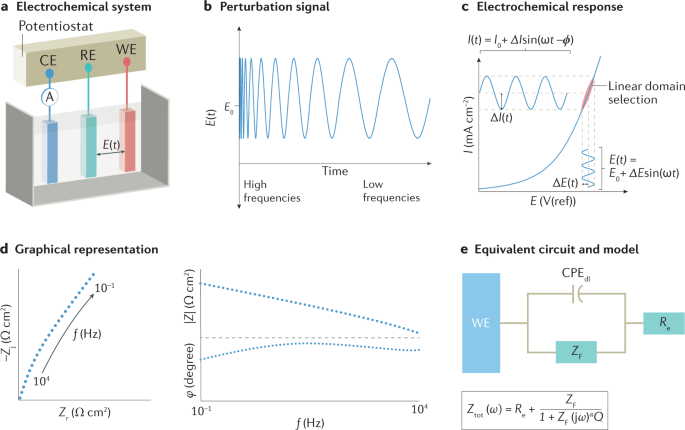
Multi-model electrochemical impedance spectroscopy uses frequency scanning to characterize how a battery responds to a small electrical stimulus. Impedance contains resistive and reactive information related to the battery’s electrochemical state. A diagnostic system compares the measured response with reference data and uses algorithmic analysis, potentially including machine-learning or AI-assisted methods, to estimate characteristics such as capacity or state of health.
Source: Battery University

The Spectro Modular specifications supplied for this article list an excitation range of 16–2,048 Hz and a test time under 30 seconds for the stated rapid test. Lower-frequency measurements are possible, but the listed examples require longer test times. Other Battery University material describes approximate scanning around 2,000 Hz to 4 Hz for relevant testing. These ranges should be treated as device- and application-dependent rather than as a specification for all Spectro instruments.
The same product information lists a capacity range of 27–150 Ah and supports voltage display, temperature readings, state-of-charge results, built-in matrices, and storage for up to 1,000 test results. The supplied evidence does not justify extending those limits to every Spectro configuration, nor does it establish a universal 3–48 V or 300 Ah limit for all devices.
Applicability is affected by battery chemistry, internal construction, voltage, capacity, configuration, temperature, internal resistance, state of charge, cable connections, and measurement conditions. A matrix intended for a particular lead-acid model should not be assumed to provide equivalent results for lithium-ion, another lead-acid design, or a series-connected pack unless the instrument and reference data explicitly support that use.
Impedance-based screening can reduce the time and disruption associated with repeated maintenance checks, but it does not universally replace a full discharge-capacity test. Full testing or application validation remains appropriate when a battery is near a critical threshold, when the result conflicts with field performance, when the battery is outside the reference range, or when a safety or warranty decision depends on a definitive capacity measurement. Rapid diagnostics are most effective when used as part of a controlled maintenance process that combines test results, historical trends, visual inspection, charging records, and mission requirements.
References
- Battery University | BU-920: Matrix Library. (n.d.). http://www.batteryuniversity.com/article/bu-920-matrix-library
- Battery University | BU-921: Testing Batteries by Multi-Model EIS. (n.d.). http://www.batteryuniversity.com/article/bu-921-testing-batteries-by-multi-model-eis
- Spectro Modular | Cadex Electronics. (n.d.). https://shop.cadex.com/products/spectro_modular
- Testing Battery with EIS. (n.d.). https://www.large-battery.com/blog/testing-battery-with-eis-early-fault-detection-and-analysis
- Electrochemical Impedance Spectroscopy (EIS) - Battery Tests. (n.d.). https://www.sinexcel-re.com/blog/what-is-electrochemical-impedance-spectroscopy
- [Full Guide] How to Test a Deep Cycle Battery?. (n.d.). https://www.redodopower.com/blogs/learn-about-lithium/how-to-test-a-deep-cycle-battery
- Deep-Cycle Batteries: A Complete Guide. (n.d.). https://www.crownbattery.com/news/deep-cycle-batteries-complete-guide
- What does electrochemical impedance spectroscopy have to do with Li-ion health? - Battery Power Tips. (n.d.). https://www.batterypowertips.com/what-does-electrochemical-impedance-spectroscopy-have-to-do-with-li-ion-health-faq
- August 2025 - Article. (n.d.). https://www.cadex.com/blog/post/august-2025-article
- Deep Cycle Batteries Explained | Battery Zone. (n.d.). https://www.batteryzone.co.nz/the-zone/expert-advice/deep-cycle-batteries-explained