All batteries lose some stored charge while sitting idle. This loss is called self-discharge, and it occurs even when the battery is not connected to a load. In a healthy battery, the rate is low enough that the battery remains useful between charges or during storage. In an unhealthy or unsuitable battery, the loss can become fast enough to reduce runtime, upset pack balance, or signal an internal fault.
Self-discharge is not limited to one chemistry. Primary lithium-metal cells, alkaline cells, lead-acid batteries, nickel-based batteries and lithium-ion cells all exhibit it, but at very different rates. Temperature, age, cycling history, manufacturing quality and abuse conditions can all shift a normal rate into an elevated one. For engineering work, the important question is not whether self-discharge exists, but whether the observed rate is expected for that battery type and operating history.
Elevated self-discharge should be treated as both a performance issue and, in some cases, a diagnostic warning. A battery that rapidly loses charge may simply be old or poorly suited to the application, but it may also have contamination, separator damage, lithium plating, or a developing internal leakage path.
What Self-Discharge Is
Self-discharge is the gradual loss of charge while a battery is at rest. Electrically, it can be viewed as an internal leakage path that consumes stored energy without doing useful external work. Chemically, it is caused by side reactions inside the cell: electrode reactions, electrolyte decomposition, impurity reactions, corrosion processes, or other parasitic mechanisms that proceed even when the terminals are open.
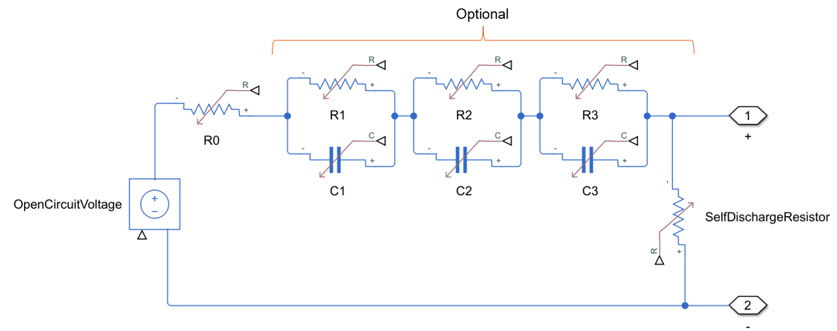
Source: Battery University

This behavior is a normal battery characteristic. A battery with measurable self-discharge is not automatically defective. Cell chemistry, separator design, electrolyte composition, state of charge and storage temperature all influence the expected value. For this reason, self-discharge should be judged against the correct reference condition rather than against an ideal of zero loss.
Elevated self-discharge means that the battery loses stored energy faster than expected for its chemistry, age and storage environment. The practical effect is simple: the battery has less available capacity when the user returns to it. In a flashlight, instrument pack, vehicle starter battery, energy-storage module or backup device, this can look like poor runtime, unexpected low-voltage shutdown, inability to hold charge, or a pack that becomes unusable after storage.
The tendency toward self-discharge is generally permanent in the sense that the internal mechanism causing it cannot be reversed by a normal recharge. If the battery has not been damaged by over-discharge or overheating, charging can restore the state of charge temporarily. It does not usually remove the underlying leakage path or aging mechanism. A battery with abnormal self-discharge will usually continue to behave that way, and the rate may worsen with further age or stress.
How Self-Discharge Differs by Battery Chemistry
Self-discharge varies widely across battery systems. Comparing values without naming the chemistry and conditions can be misleading, because the same monthly loss that is normal for one battery type may be unacceptable for another.
Primary cells are often designed for long shelf life. Lithium-metal primary cells and many alkaline cells have comparatively low self-discharge, making them suitable for devices that may sit unused for long periods. Their chemistry and construction are optimized for storage rather than repeated cycling. Even so, they are not immune to temperature effects, seal degradation, or age-related changes.
Rechargeable batteries generally have higher self-discharge than primary cells, although the range is broad:
| Battery type | Typical self-discharge tendency | Practical implication |
|---|---|---|
| Primary lithium-metal | Low | Long shelf life when stored properly |
| Alkaline primary | Low to moderate | Good shelf life, but affected by age and heat |
| Lead-acid | Moderate | Needs periodic charging in storage to avoid low state of charge and sulfation |
| Nickel-cadmium | Relatively high compared with lithium-ion and lead-acid | Older packs may lose charge quickly between uses |
| Nickel-metal hydride | Often high in older designs; low-self-discharge versions are available | Must distinguish conventional NiMH from low-self-discharge NiMH |
| Lithium-ion | Typically low | Good charge retention, but abnormal loss can be a warning sign |
Approximate self-discharge figures are useful only when qualified. Some commonly cited room-temperature figures place lithium-ion around a few percent per month, lead-acid at a moderate monthly loss, and nickel-based systems higher, especially immediately after charge. However, actual results depend on chemistry variant, temperature, state of charge, cell design, age and previous use.
Nickel-based batteries need special qualification. Older nickel-cadmium and conventional nickel-metal hydride cells can show relatively high self-discharge. In contrast, low-self-discharge NiMH cells were developed specifically to improve charge retention during storage. Treating all NiMH cells as one category can therefore lead to poor storage-life estimates.
Lithium-ion cells usually have low self-discharge compared with nickel-based rechargeable cells. That low baseline is one reason abnormal self-discharge in lithium-ion receives attention: a cell that loses charge much faster than comparable cells under the same conditions may be signaling contamination, internal damage, lithium plating effects, or another defect.
Temperature, Age and Cycling Effects
Temperature is one of the strongest external drivers of self-discharge. In all major battery chemistries, higher temperature accelerates the chemical reactions that consume charge. A common rule of thumb is that self-discharge roughly doubles for every 10°C rise in temperature. This is not a universal law; the exact behavior depends on chemistry, state of charge, materials and temperature range. Still, it is a useful engineering warning: warm storage shortens useful storage time.
A battery left in a hot vehicle, engine compartment, unventilated cabinet or sun-exposed storage area can lose a noticeable amount of energy even if it is never connected to a load. The same battery stored at a moderate temperature may remain serviceable much longer. Heat also accelerates aging mechanisms, so the penalty is not only temporary charge loss but also potential long-term degradation.
Age and cycling history add another layer. As a battery ages, internal materials change. Electrodes lose active surface area, protective films grow or become less stable, separators and electrolytes experience chemical stress, and corrosion or impurity reactions may increase. These effects can create more parasitic reaction paths and raise the self-discharge rate.
High cycle count can have a similar effect. Repeated charge and discharge expands, contracts and stresses active materials. In lithium-ion cells, aging can involve loss of active lithium, growth of surface films and increased internal resistance. Under some conditions, lithium can plate onto the anode; this consumes lithium inventory, reduces performance and may contribute to internal short risk. In lead-acid batteries, repeated deep cycling and time spent at low state of charge can encourage sulfation and capacity loss.
Nickel-based batteries provide a clear practical example. Older nickel-based packs can reach a point where leakage becomes the dominant reason the pack goes flat. The user may charge the pack, store it briefly, and find it unusable before normal work begins. In that condition, the issue is not simply a small loss of runtime. The pack has become unreliable because its idle losses are too high for the application.
Storage state of charge can also matter. Some chemistries tolerate partial charge storage better than others, and high state of charge can increase parasitic reaction rates in certain lithium-ion cells. Lead-acid batteries, however, should not be left discharged because low state of charge promotes sulfation. Storage instructions therefore need to be chemistry-specific rather than generic.
Defects, Internal Shorts and Safety Warning Signs
Although self-discharge is normal, abnormal self-discharge can indicate a defect. Poor fabrication, contamination, separator damage, metallic particles, burrs on current collectors, moisture, electrolyte impurities, or improper handling can create internal leakage paths. These paths allow charge to be neutralized inside the cell rather than delivered to the external circuit.
In manufacturing, even small defects matter. A tiny conductive particle or separator flaw may not immediately create a hard short circuit. Instead, it may first appear as elevated self-discharge. Over time, cycling, vibration, swelling, dendrite growth or thermal stress can make the defect more serious. This is why self-discharge screening is an important quality-control step before cells are assembled into packs.
Lithium-ion cells deserve particular attention because abnormal self-discharge may be associated with failure mechanisms that also affect safety. Regular cycling and stressful charging can contribute to unwanted lithium deposition on the anode. Lithium plating reduces the inventory of active lithium, can raise internal resistance, and may increase the risk of an internal short. Elevated self-discharge can precede more serious internal short behavior, although the exact hazard threshold depends on the cell and condition.
A battery management system or protection circuit can reduce abuse. It may limit overcharge, over-discharge, overcurrent or operation outside a temperature window. These protections are essential in lithium-ion packs, but they do not repair a cell that already has abnormal internal leakage. A BMS can disconnect a pack or flag a fault; it cannot remove contamination, heal separator damage, or restore lost active lithium.
Warning signs that deserve investigation include:
- A battery that repeatedly loses charge much faster than comparable units.
- A multi-cell pack that becomes imbalanced soon after balancing.
- A cell that warms unexpectedly during rest or normal charging.
- Rapid voltage decline after charge under controlled storage conditions.
- A pack that reaches low-voltage cutoff much earlier than expected after storage.
- Visible swelling, leakage, odor, corrosion, or mechanical damage.
Safety note: do not continue using, charging or storing a battery that shows abnormal heat, swelling, leakage, smoke, odor, physical damage or repeated unexplained charge loss. Follow the manufacturer’s handling and disposal guidance for that chemistry.
Manufacturers often screen for self-discharge by charging cells, allowing them to rest under controlled conditions, and measuring open-circuit voltage decline or state-of-charge loss. Cells with unusually high loss compared with the batch can be rejected or set aside for further analysis. This is especially important before pack assembly, because one defective cell can compromise the performance of the entire pack.
Testing, Storage Decisions and When to Retire a Battery
A practical self-discharge check is straightforward, but it must be controlled. The goal is to separate true internal loss from measurement error, external loads, temperature effects or normal voltage relaxation after charge.
A basic procedure is:
- Fully charge the battery using the correct charger and method for its chemistry.
- Let the battery rest long enough for immediate voltage relaxation to settle.
- Disconnect all loads, chargers and accessories unless the purpose is to test the whole device standby drain.
- Store the battery at a stable, moderate temperature.
- Measure open-circuit voltage, state of charge, or remaining capacity after a defined interval.
- Compare the result with a known-good battery of the same type or the manufacturer’s storage specification.
Voltage alone can be misleading for chemistries with flat voltage curves, such as some lithium-ion phosphate cells. When possible, compare measured capacity or coulomb-counted state of charge rather than relying only on terminal voltage. Also account for the protection electronics in smart packs, because the electronics may consume a small standby current even if the cells themselves are healthy.
A severe practical threshold from the reference guidance is a battery that self-discharges by about 30 percent in 24 hours. That level should be treated as abnormal and the battery should be discarded rather than returned to service. The exact retirement criterion in a professional setting should still consider chemistry, application criticality, safety requirements and manufacturer specifications, but a one-day loss of that magnitude is far beyond ordinary storage behavior for most uses.
Multi-cell packs add another complication: imbalance. If one cell has higher leakage than the others, it will reach a lower state of charge first. During discharge, that weak cell may trigger early low-voltage cutoff even though the rest of the pack still contains energy. During charge, the battery management system may spend more time balancing or may be unable to keep the pack equalized. Over time, the leaky cell can reduce usable pack capacity and increase stress on neighboring cells.
Deep discharge can turn self-discharge from a nuisance into permanent damage. A lead-acid battery left at low state of charge is vulnerable to sulfation, where lead sulfate crystals become harder to reverse during recharge. Capacity falls and internal resistance rises. A lithium-ion pack allowed to fall below its safe voltage range may enter undervoltage protection, suffer copper dissolution or other internal damage, or become unsafe to recharge depending on severity and duration. Nickel-based cells can also be damaged or driven into reversal in poorly managed series packs.
For stored batteries, the best decision depends on chemistry:
- Lead-acid: keep near full charge and recharge periodically to avoid sulfation. Avoid hot storage because it accelerates self-discharge and corrosion.
- Lithium-ion: store according to the manufacturer’s recommended state of charge and temperature. Avoid full-charge hot storage and avoid allowing the pack to fall into undervoltage.
- Nickel-based: expect higher idle loss in many older designs and recharge before use. For long standby intervals, consider low-self-discharge NiMH where appropriate.
- Primary cells: store cool and dry, and remove from devices when leakage or very long storage is a concern.
Research and manufacturing tests often use elevated-temperature storage to reveal self-discharge problems faster. This can be useful because heat accelerates many parasitic reactions, allowing abnormal cells to separate from normal cells in less time. However, results must be interpreted carefully. High-temperature behavior does not always scale cleanly to room-temperature storage, and different degradation mechanisms may dominate at different temperatures.
A battery should be retired when its self-discharge makes it unreliable for the application, when it repeatedly falls below safe voltage in storage, when one cell causes persistent pack imbalance, or when abnormal loss is accompanied by heat, swelling, leakage or other safety warning signs. Recharging may restore temporary charge, but it does not correct the internal condition that caused elevated self-discharge. For critical equipment, emergency systems and high-energy lithium-ion packs, conservative retirement is usually the safer engineering decision.
References
- Battery University | BU-802b: What does Elevated Self-discharge Do?. (n.d.). http://www.batteryuniversity.com/article/bu-802b-what-does-elevated-self-discharge-do
- A mystifying case of battery self-discharge - Embedded. (n.d.). https://www.embedded.com/a-mystifying-case-of-battery-self-discharge
- The Benefits of Lithium Ion Batteries – Schumacher Electric. (n.d.). https://www.schumacherelectric.com/blog/the-benefits-of-lithium-ion-batteries
- Lithium Battery Self-Discharge Explained: What Buyers Must Know. (n.d.). https://www.bonnenbatteries.com/lithium-battery-self-discharge-explained-what-engineers-and-buyers-must-know
- Self-Discharge: LiFePO4 vs Lead-Acid Storage | Vipboss. (n.d.). https://vipbosspower.com/blogs/lithium-battery-guides/self-discharge-rate-lithium-vs-lead-acid
- Factors Affecting Self-discharge of Lithium Battery. (n.d.). https://www.grepow.com/blog/factors-affecting-self-discharge-of-lithium-battery.html
- What is the self-discharge rate of a lithium-ion battery? | EL-CELL. (n.d.). https://www.el-cell.com/what-is-the-self-discharge-rate-of-a-lithium-ion-battery
- Why self-discharge is important in batteries - Battery Power Tips. (n.d.). https://www.batterypowertips.com/why-self-discharge-is-important-in-batteries
- What is Lithium-Ion cell self-discharge?. (n.d.). https://www.youtube.com/watch?v=lcqt-t9tDe4
- Abnormal Self-Discharge in Lithium-Ion Batteries. (n.d.). https://www.researchgate.net/publication/363983949_Abnormal_Self-Discharge_in_Lithium-Ion_Batteries