A lithium-ion battery that appears completely dead may not be fully discharged. Its protection circuit may have disconnected the battery after an over-discharge, abnormal load, short-circuit condition, or extended period in storage. In some cases, a charger or battery analyzer with a suitable wake-up or boost function can re-establish charging. In other cases, very low voltage indicates permanent internal damage and the battery should not be forced back into service.
The distinction matters because recovery is not simply a matter of applying a higher voltage. Battery chemistry, cell count, battery-management-system design, charger compatibility, and the battery’s condition all affect whether recovery is appropriate. The procedures below are therefore limited to inspection and the use of equipment specifically intended for the battery. Uncontrolled jump-starting or bypassing the protection circuit is not a safe general-purpose method.
Why Lithium-Ion Batteries Enter Sleep Mode
Lithium-ion packs commonly include a protection circuit or battery-management system (BMS). Depending on the design, it monitors cell or pack voltage, current, temperature, and other fault conditions. If a cell group falls below its low-voltage cutoff, the BMS can disconnect the output and, in some designs, the charging path as well. The pack then appears to have no voltage or may show a voltage that is too low for an ordinary charger to recognize.
Over-discharge is a common trigger. It can occur when a load remains connected after the battery has been depleted, when a device has a small standby drain during long storage, or when a battery is stored for an extended period with little charge remaining. Self-discharge and the BMS’s own quiescent consumption can gradually reduce cell voltage even when the battery is not being used.
There is no single sleep-mode voltage for every lithium-ion battery. Reported low-voltage protection thresholds are commonly in the approximate range of 2.2 to 2.9 V per cell, but the actual threshold depends on the cell chemistry, BMS settings, cell configuration, and manufacturer. A multi-cell pack’s terminal voltage must therefore be interpreted in relation to its series cell count. A reading at the pack terminals may also be affected by a disconnected BMS and does not necessarily show the voltage of every individual cell.
The protection circuit is intended to prevent further discharge and reduce the chance of cell damage. It is not proof that the cells remain healthy. A pack that has entered protection mode briefly may recover normally, while one that has remained deeply discharged for a long time may have increased internal leakage, loss of capacity, or internal defects.
How a Boost Charger Can Reactivate a Sleeping Battery
Some battery chargers and analyzers include a wake-up, recovery, or boost function. Rather than rejecting a pack with a very low terminal voltage, the equipment applies a controlled, limited charging stimulus while checking whether the battery responds. If the protection circuit reconnects and the pack accepts charge normally, the charger can transition into its standard lithium-ion charging process.
This function can be effective when the battery is merely in a protection state and the cells have not suffered permanent damage. It is not a repair for a failed cell, internal short circuit, severe over-discharge, swelling, leakage, or other physical damage. A charger that reports a fault or refuses to proceed should not be overridden.
Before connecting any equipment:
- Confirm the battery chemistry and nominal voltage.
- Check that the charger is designed for the battery’s chemistry and series-cell configuration.
- Inspect the case, terminals, wiring, and connector for damage.
- Measure the available pack voltage with a suitable meter.
- Confirm positive and negative polarity. Do not rely only on connector shape or wire color.
- Follow the battery and charger manufacturer’s recovery instructions.
A suitable recovery sequence can be represented as follows:
Battery enters low-voltage protection
                |
                v
Inspect pack and measure voltage/polarity
                |
                v
Connect approved charger/analyzer with wake-up function
                |
                v
Controlled boost stimulus and protection-circuit check
                |
       +--------+--------+
       |                 |
       v                 v
Pack responds       Pack remains faulted
       |                 |
       v                 v
Normal lithium-ion   Stop recovery; remove
charge sequence      damaged or unresponsive pack
       |
       v
Monitor voltage, temperature, and charger status
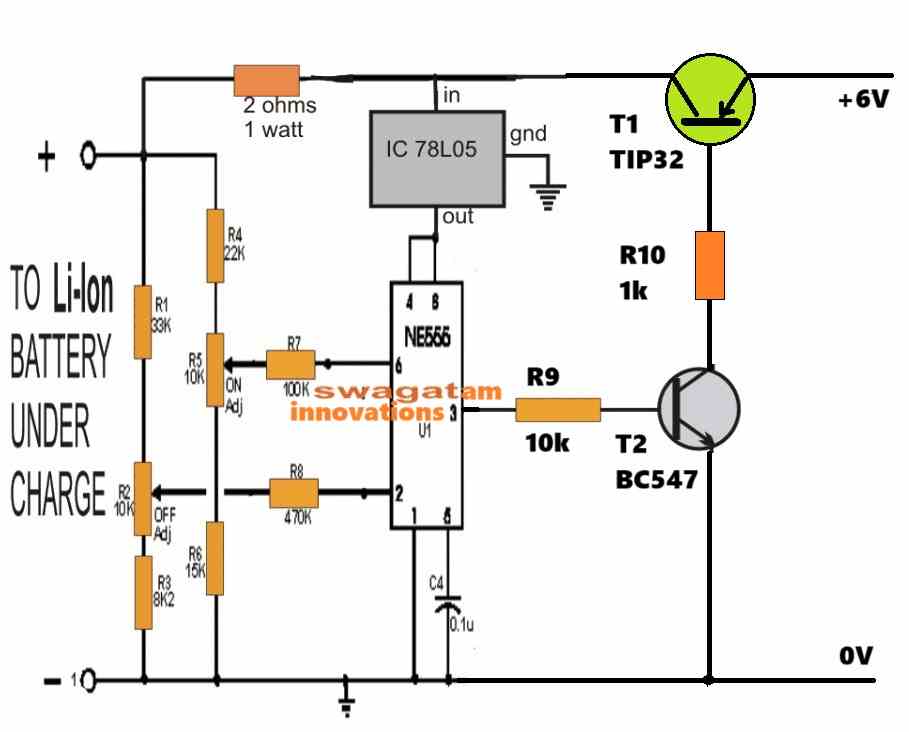
Source: Battery University
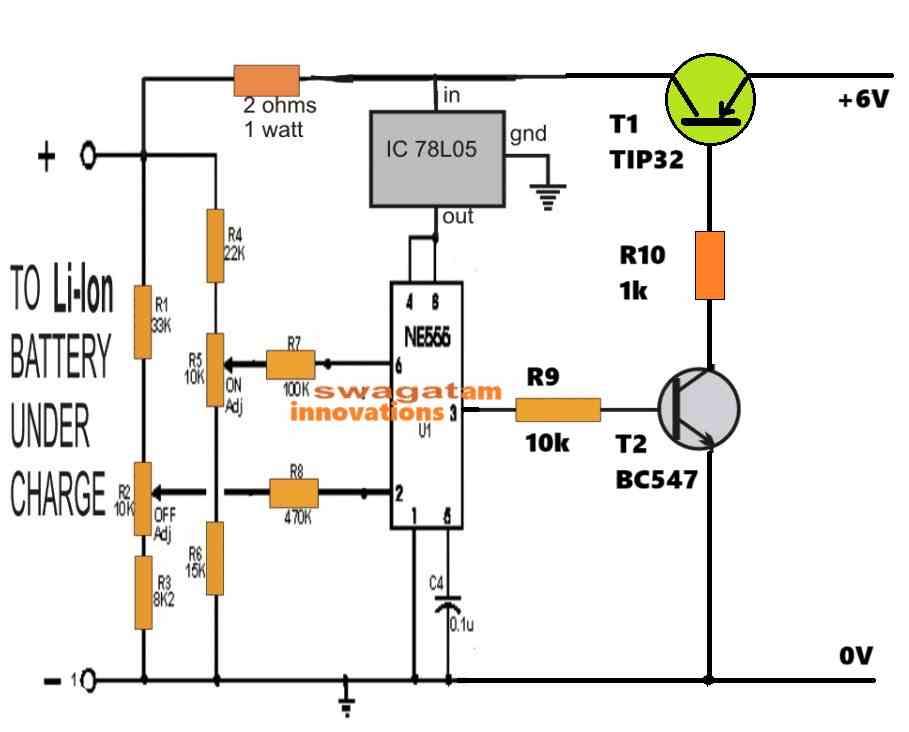
The boost stage should be regarded as a controlled diagnostic and charging step, not as a substitute for a charger. Once the BMS wakes, the charger should use the correct constant-current/constant-voltage profile for the battery. If the pack repeatedly falls back into protection, rises unusually quickly in voltage, becomes warm, or fails to accept current, charging should stop.
Do not connect a random power supply, another battery, or an unregulated source in an attempt to force the BMS awake. Such methods can bypass important current and temperature controls, create excessive current, reverse polarity, or damage the cells. Even when a pack appears to recover, its capacity and internal resistance may have changed; a successful wake-up does not certify the battery for continued use.
Safety Checks Before Attempting Recovery
Very low cell voltage is a safety concern, not only a charging inconvenience. When a lithium-ion cell remains deeply discharged, copper from internal current-collector components can dissolve and later form conductive deposits or copper shunts. These deposits may contribute to internal shorts during subsequent charging. The risk depends on cell construction, chemistry, depth of discharge, and duration, so a single voltage number should not be treated as a universal safe boundary.
A commonly cited warning region is prolonged operation below approximately 1.5 V per cell. This value is not a universal pass/fail limit for every lithium-ion chemistry or pack design. A battery that has remained below this level, or whose history is unknown, should be assessed by a qualified battery professional rather than routinely boosted.
Before any approved recovery attempt, do not proceed if the pack is:
- Swollen, cracked, leaking, corroded, or physically damaged
- Hot, giving off an unusual odor, or showing signs of venting
- Wet or contaminated
- Exposed to a short circuit, crushing, impact, or fire
- Unresponsive to a compatible charger or recovery analyzer
- Missing required identification or showing an uncertain chemistry
Polarity must be checked with a suitable meter before connection. Incorrect polarity can damage the BMS, charger, wiring, and cells, and can create a short-circuit or fire hazard. Use equipment with appropriate current limiting and protective functions. Keep the battery on a non-combustible surface, away from flammable materials, and remain present throughout the recovery attempt.
Monitor both temperature and voltage. A modest voltage increase during a controlled precharge does not by itself demonstrate that the cells are healthy. Stop immediately if the battery heats rapidly, swells, emits an odor, shows erratic voltage behavior, or if the charger reports a fault. Do not leave a recovered pack unattended or return it to normal service without suitable testing.
A pack that has been forced to accept charge after severe over-discharge may have reduced capacity or an increased self-discharge rate. If it cannot complete a normal charge cycle, cannot hold its voltage, or behaves abnormally under a controlled load test, replacement is safer than continued use.
Storage Practices That Prevent Over-Discharge
The most reliable way to avoid sleep-mode recovery is to prevent the battery from remaining at a very low state of charge. Storing a lithium-ion battery near empty gives self-discharge and the BMS’s standby consumption more opportunity to take the cell below its protection threshold.
Storage guidance varies by chemistry, battery design, and manufacturer. In general, use the manufacturer’s specified storage state of charge rather than assuming that every lithium battery should be stored either full or empty. A moderate partial charge is commonly preferred for long-term storage because it reduces the stress associated with both a fully charged and a deeply discharged state. The supplied guidance does not establish one universal percentage for all lithium-ion products.
Store batteries in a cool, dry location within the temperature range specified by the manufacturer. Protect them from heat, direct sunlight, moisture, mechanical damage, and conductive objects that could short the terminals. Disconnect avoidable loads, including equipment that continues to draw standby current.
Periodic inspection is useful for batteries held in storage. Check for swelling, leakage, corrosion, physical damage, and an unexpected loss of voltage. Recharge only with the correct charger and before the battery reaches a deeply discharged condition. The interval depends on the battery’s self-discharge rate, BMS design, temperature, and application; a fixed interval should not replace the manufacturer’s instructions.
A Cadex study described in the source material examined stored mobile-phone batteries and found that some could be restored with an appropriate boost process while others were non-serviceable. The supplied evidence does not provide the study’s exact percentages, so those figures should not be generalized here. The practical conclusion is that recovery is variable: a battery that wakes up is not necessarily a battery that has retained its original safety, capacity, or service life.
For that reason, prevention is preferable to recovery. Store the pack at the manufacturer’s recommended partial state of charge, inspect it periodically, and recharge it with compatible equipment before prolonged low-voltage storage develops. If a battery has already reached an unknown or dangerously low condition, treat it as potentially damaged and use professional evaluation or an approved recycling channel rather than repeatedly attempting to force it awake.
References
- BU-808a: How to Awaken a Sleeping Li-ion. (n.d.). http://www.batteryuniversity.com/article/bu-808a-how-to-awaken-a-sleeping-li-ion
- How to Awaken a Sleeping Li-Ion Battery Safely. (n.d.). https://www.large-battery.com/blog/how-to-awaken-a-sleeping-li-ion-battery-safely-guide
- How to Wake Up a Sleeping Lithium Battery. (n.d.). https://www.hinen.com/blogs/energy-storage/how-to-wake-up-a-sleeping-lithium-battery
- How To Wake a New or Sleeping Lithium Battery | LiFePO4. (n.d.). https://www.youtube.com/watch?v=J0hHxu0I0-U
- How to Wake a Sleeping LFP Battery. (n.d.). https://www.youtube.com/watch?v=yBleBZi8t5M
- How to Wake a Sleeping LiFePO4 Battery 🔋 Charge a Fully Depleted Lithium Iron Phosphate Battery. (n.d.). https://www.youtube.com/watch?v=TJ_Klwp-JyM
- How to Wake a Sleeping Lithium Battery | Batteries Plus. (n.d.). https://www.batteriesplus.com/blog/power/waking-up-a-lifepo4
- How do you reactivate a dormant or sleeping lithium battery?. (n.d.). https://www.quora.com/How-do-you-reactivate-a-dormant-or-sleeping-lithium-battery
- My lithium batteries have gone to sleep. Any advice on how .... (n.d.). https://www.facebook.com/groups/342550222840999/posts/2243785169384152
- How to Revive “Sleeping” Lithium House Batteries After Deep Discharge | iRV2 Forums an RV LIFE Community. (n.d.). https://www.irv2.com/threads/how-to-revive-sleeping-lithium-house-batteries-after-deep-discharge.2184871