Lithium-ion battery development has gradually shifted from pursuing higher energy density toward managing safety, durability, and service life. The change became especially visible after consumer-product battery failures in 2006, when thermal events demonstrated that a small cell could create serious system-level risks. A battery that stores more energy is useful only if it can do so reliably over its intended operating life.
That durability requirement is particularly important in electric vehicles. Extending battery life beyond the service expectations of early products reduces replacement cost, preserves vehicle range, and makes large battery packs more practical. Testing therefore combines controlled laboratory cycling with field data. The Nissan Leaf, for example, has been used in battery-life evaluations and field studies to examine how real driving, climate, charging, and storage conditions affect capacity over time. The results illustrate why battery aging cannot be explained by cycle count alone.
Several related processes determine when a lithium-ion battery becomes unsuitable: parasitic chemical reactions, loss of active lithium or electrode material, rising internal resistance, mechanical damage, and pack-level imbalance. Coulombic efficiency is one of the most sensitive ways to detect some of these processes at the cell level.
Coulombic Efficiency and Lithium-Ion Battery Longevity
Coulombic efficiency (CE) is the ratio of the charge recovered during discharge to the charge supplied during charging:
[ \text{CE} = \frac{\text{charge discharged}}{\text{charge charged}} ]
A perfectly reversible cell would return all the charge put into it, giving a CE of 100 percent. Real cells are not perfectly reversible. Some lithium is consumed by side reactions, some electrode reactions do not reverse completely, and some charge is associated with processes that do not contribute to useful discharge capacity.
The difference may be extremely small in a single cycle but significant over hundreds or thousands of cycles. If a cell loses a small amount of cyclable lithium during every charge and discharge, the losses accumulate. High and stable CE is therefore an important indicator of long-term cell quality, although it is not by itself a complete prediction of service life.
CE depends on operating conditions, including:
- charge and discharge current;
- temperature;
- state of charge and depth of discharge;
- upper and lower voltage limits;
- electrode loading and cell design; and
- the electrolyte and additives used during formation.
Moderate operating conditions generally reduce unwanted reactions. High temperature accelerates many chemical reactions, while low temperature can reduce reaction kinetics and increase the risk of lithium plating during charging. High states of charge can also increase electrode and electrolyte stress, particularly when the positive electrode is held near its upper voltage limit.
NASA battery testing helped demonstrate the value of carefully controlled operating conditions. The testing compared how factors such as charge rate, discharge rate, temperature, and voltage range affected coulombic efficiency and subsequent life. The general finding was that cells operated within conservative electrical and thermal limits could maintain high CE and long service life, whereas more aggressive conditions increased the rate of degradation. The exact result depends on the chemistry, cell design, and test protocol; a CE value measured under one protocol should not be treated as a universal rating for every lithium-ion cell.
CE should also be distinguished from energy efficiency. Coulombic efficiency tracks the quantity of charge, usually in ampere-hours. Energy efficiency compares watt-hours in and out, so it includes voltage differences as well as charge losses. A cell can have high CE while showing lower energy efficiency because voltage falls during discharge and rises during charge as a result of internal resistance and polarization.
For battery-life work, CE is most useful when measured with precise equipment over many cycles and combined with capacity, resistance, voltage, and temperature data. Small changes can reveal increasing parasitic activity before the loss is obvious in a simple runtime test.
Electrolyte Additives and Their Effects on Coulombic Efficiency
Electrolyte additives are deliberately selected chemicals used in small concentrations to change how the electrolyte reacts with the electrodes. One important function is to promote a more stable solid-electrolyte interphase (SEI) on the negative electrode. The SEI forms during early cell operation and allows lithium ions to pass while limiting electron transfer and further electrolyte decomposition.
A stable SEI can improve CE by reducing continuing side reactions. It may also limit gas generation, reduce active-lithium consumption, improve charge acceptance, and help control impedance growth. Additives can serve related functions at the positive electrode by helping form a protective interphase at high voltage. In practice, the desired result is not simply the thickest possible surface layer. The layer must be chemically stable, ionically conductive, mechanically resilient, and compatible with the rest of the cell.
The same additive does not necessarily produce the same result in every chemistry. Lithium iron phosphate and manganese-oxide-based cells have different electrode surfaces, voltage ranges, transition-metal behavior, and interfacial reactions. An additive that improves CE or resistance growth in one chemistry can provide little benefit, or create a new trade-off, in another. Formulation must also account for electrode loading, separator, electrolyte salt, formation temperature, and the intended charging conditions.
Cell formation is especially important. During formation, the cell is charged and discharged under controlled conditions to establish the initial interphases. The formation protocol can influence the composition and uniformity of the SEI, so additive performance cannot be separated completely from the way the cell is manufactured and tested.
This also affects the interpretation of CE measurements. Results depend on the test temperature, rest periods, current, voltage limits, cycle duration, and measurement precision. A small improvement in CE may be meaningful only when the test is sufficiently accurate and the conditions represent the intended application. Long-duration testing is needed to determine whether an additive reduces degradation over time or merely changes the early formation behavior.
Research collaborations involving Dalhousie University and battery-industry partners have contributed to the broader study of electrolyte formulations, interfacial chemistry, and coulombic efficiency. Such work is valuable because additive development links laboratory measurements with practical cycle-life outcomes. However, additive claims should be evaluated for the specific chemistry and protocol involved rather than generalized across all lithium-ion batteries.
Additives also have limits. They cannot compensate for excessive temperature, poor manufacturing control, unsuitable voltage limits, damaged electrodes, or inadequate thermal management. They are one part of a cell-design strategy that includes electrode materials, particle size, binder, current collectors, separator, electrolyte, formation, and quality control.
Capacity Degradation in Electric-Vehicle Powertrains
In an electric vehicle, battery degradation affects more than the distance available from a full charge. Lost capacity reduces range, while increased internal resistance reduces the pack’s ability to deliver or accept power. The driver may experience weaker acceleration, reduced regenerative braking, slower charging, or power limits when the battery is cold, hot, or at a low state of charge.
The battery chemistry and cell format reflect several competing requirements:
| Design objective | Benefit | Possible trade-off |
|---|---|---|
| High energy density | More stored energy for a given mass or volume | Greater sensitivity to heat, voltage, and mechanical stress in some designs |
| High power capability | Strong acceleration and regenerative charging | More thermal load and electrode stress at high current |
| Long cycle life | Better retention over repeated use | May require lower energy density or more conservative operating limits |
| Thermal stability | Improved tolerance of heat and abuse | Can involve compromises in energy density or low-temperature performance |
| Low manufacturing cost | More affordable large packs | Requires strong process control to maintain consistency |
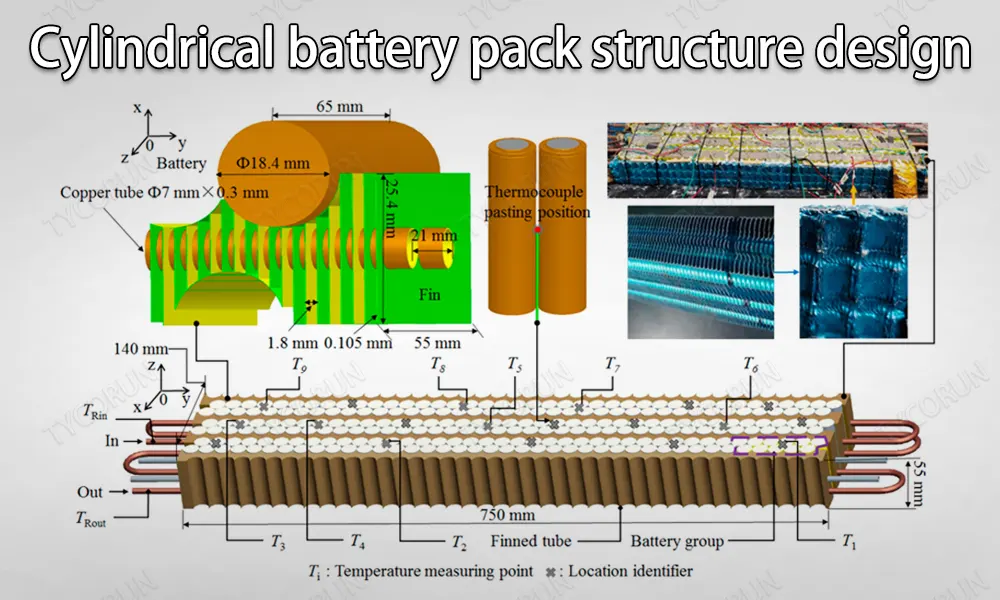
Early Tesla vehicles used many small cylindrical cells in the 18650 format. These cells had been widely manufactured for other applications, giving the format an established production base and known quality-control processes. Using many small cells also allowed the pack to distribute heat through a large surface area, isolate some cell-level failures through electrical protection, and scale energy capacity by changing the number of cells and modules.
The approach introduces engineering challenges. A large number of cells creates many welds, electrical connections, sensors, and opportunities for variation. The pack therefore requires careful cell matching, monitoring, fusing, cooling, and balancing. A small cylindrical cell is not automatically safer or longer-lived than a larger pouch or prismatic cell; the result depends on the complete cell and pack design.
High energy density can increase the consequences of operating stress, but degradation is controlled by more than energy density alone. Important stressors include high state of charge, fast charging, high temperature, deep cycling, and high current. Fast charging at low temperature is particularly demanding because lithium ions may not enter the negative-electrode structure quickly enough. Metallic lithium can then deposit on the surface, reducing usable lithium and potentially creating an internal short-circuit hazard.
Pack-level behavior can differ from the behavior of an individual cell. The battery-management system limits voltage, current, and temperature, but it must also estimate state of charge and state of health. Cell-to-cell variation can cause balancing losses and make the weakest cell determine the usable pack window. Cooling-system design affects temperature uniformity, while module layout, busbars, compression, and enclosure structure affect electrical and mechanical stress.
For this reason, an EV battery may retain substantial nominal capacity while its available power or usable energy is restricted by resistance growth, temperature, imbalance, or safety limits. Vehicle testing should measure capacity and resistance under defined conditions and should distinguish cell aging from changes caused by software limits, balancing, thermal control, and operating history.
Source: Battery University

What Ultimately Causes Lithium-Ion Batteries to Fail
Lithium-ion batteries usually fail through the accumulation or interaction of several degradation mechanisms rather than one universal event. The main mechanisms include:
- SEI growth and parasitic reactions: continued electrolyte decomposition consumes cyclable lithium and increases impedance.
- Lithium plating: charging under unfavorable conditions, especially at low temperature or high rate, can deposit metallic lithium on the negative electrode.
- Electrolyte breakdown: high voltage, heat, and chemical instability can produce gases, resistive surface films, and loss of electrolyte performance.
- Loss of active material: electrode particles or their crystal structures can become electrochemically inactive.
- Particle cracking: repeated expansion and contraction can create cracks, expose new surfaces, and break electrical contact.
- Conductivity loss: binder degradation, contact loss, porosity changes, or separator damage can reduce ionic or electronic transport.
- Mechanical stress: swelling, compression, vibration, impact, and manufacturing defects can damage internal interfaces or create local failure paths.
Two broad categories help organize these effects. Cycle aging is associated with charge and discharge operation. It is influenced by depth of discharge, current, temperature, voltage range, and the number of equivalent full cycles. Calendar aging occurs with time even when the battery is not being actively cycled. Temperature and state of charge during storage are particularly important calendar-aging conditions because chemical reactions continue inside a charged cell.
The visible results are often similar: capacity decreases, internal resistance increases, heat generation rises, and power capability falls. At a later stage, a cell may develop an open circuit, an internal short, a gas-related mechanical problem, or another functional defect. A battery can therefore reach its practical end of life when it crosses a performance threshold, a safety threshold, or a mechanical threshold. It does not need to lose all electrochemical activity to be unusable.
Testing must reflect this range of outcomes. Capacity tests show how much energy remains, resistance tests show how effectively the cell can deliver power, and thermal and abuse tests examine safety margins. Long-term cycling and storage tests reveal different mechanisms, while post-test analysis can identify cracking, interphase growth, plating, contamination, and contact loss.
The practical implications are clear. Chemistry selection should match the required energy, power, safety, and life targets. Thermal management should limit both high temperature and harmful temperature gradients. Charging controls should avoid excessive voltage, current, and low-temperature charging. Storage procedures should avoid unnecessarily hot or highly charged conditions. At the pack level, balancing, cooling, sensing, protection, and mechanical design are as important as the cell chemistry.
Future improvements will depend on treating the battery as a coupled chemical, electrical, thermal, and mechanical system. Better additives may stabilize interfaces, improved particles may resist cracking, and more consistent manufacturing may reduce cell variation. Yet no single material change eliminates aging. Reliable service life comes from coordinating cell design, formation, control software, thermal management, pack architecture, and operating limits.
References
- Battery University | BU-808: How to Prolong Lithium-based Batteries. (n.d.). https://batteryuniversity.com/article/how-to-prolong-lithium-based-batteries
- Lithium-ion Battery Degradation & Prevention | Lithium-ion Battery Degradation & Prevention | Blog | Icom America.. (n.d.). https://www.icomamerica.com/blog/lithium-ion-battery-degradation-prevention
- Lithium-ion battery - Wikipedia. (n.d.). https://en.wikipedia.org/wiki/Lithium-ion_battery
- Lithium Battery Degradation and Failure Mechanisms: A State-of-the-Art Review. (n.d.). https://www.mdpi.com/1996-1073/18/2/342
- Why Does Tesla Use 18650 Cells?. (n.d.). https://imrenbatteries.com/blogs/imren-18650-battery/why-does-tesla-use-18650-cells-imren-battery
- How Lithium-Ion Battery Chemistry Affects Performance & Life. (n.d.). https://www.fluxpower.com/blog/lithium-ion-battery-materials-and-why-their-chemistry-matters
- Challenges and opportunities for high-quality battery production at scale | Nature Communications. (n.d.). https://www.nature.com/articles/s41467-025-55861-7
- Why don’t other electric vehicles use small cylindrical cells .... (n.d.). https://www.quora.com/Why-dont-other-electric-vehicles-use-small-cylindrical-cells-18650-as-Tesla-does-Is-it-so-difficult-to-replicate-their-pack-technology-and-manufacturing-process-or-do-other-automakers-not-trust-small-cells-for-some-reason
- Understanding Lithium Battery Types: Weight vs. Power. (n.d.). https://www.facebook.com/4Patriots/videos/understanding-lithium-battery-types-weight-vs-power/1603586027771321
- Different Lithium-Ion Battery Chemistries Explained | RELiON. (n.d.). https://www.relionbattery.com/knowledge/different-lithium-ion-battery-chemistries-explained